

Medically reviewed by Dr. Kaneez Fatima, Pharm-D
Dr. Kaneez Fatima is a Doctor of Pharmacy (Pharm-D) with clinical practice experience who writes evidence-based health content for slimglowdr.com.
Published: October, 2026
Disclosure: Some links in this guide, including links to products we review, are affiliate links. If you buy through them, slimglowdr.com may earn a commission at no extra cost to you.
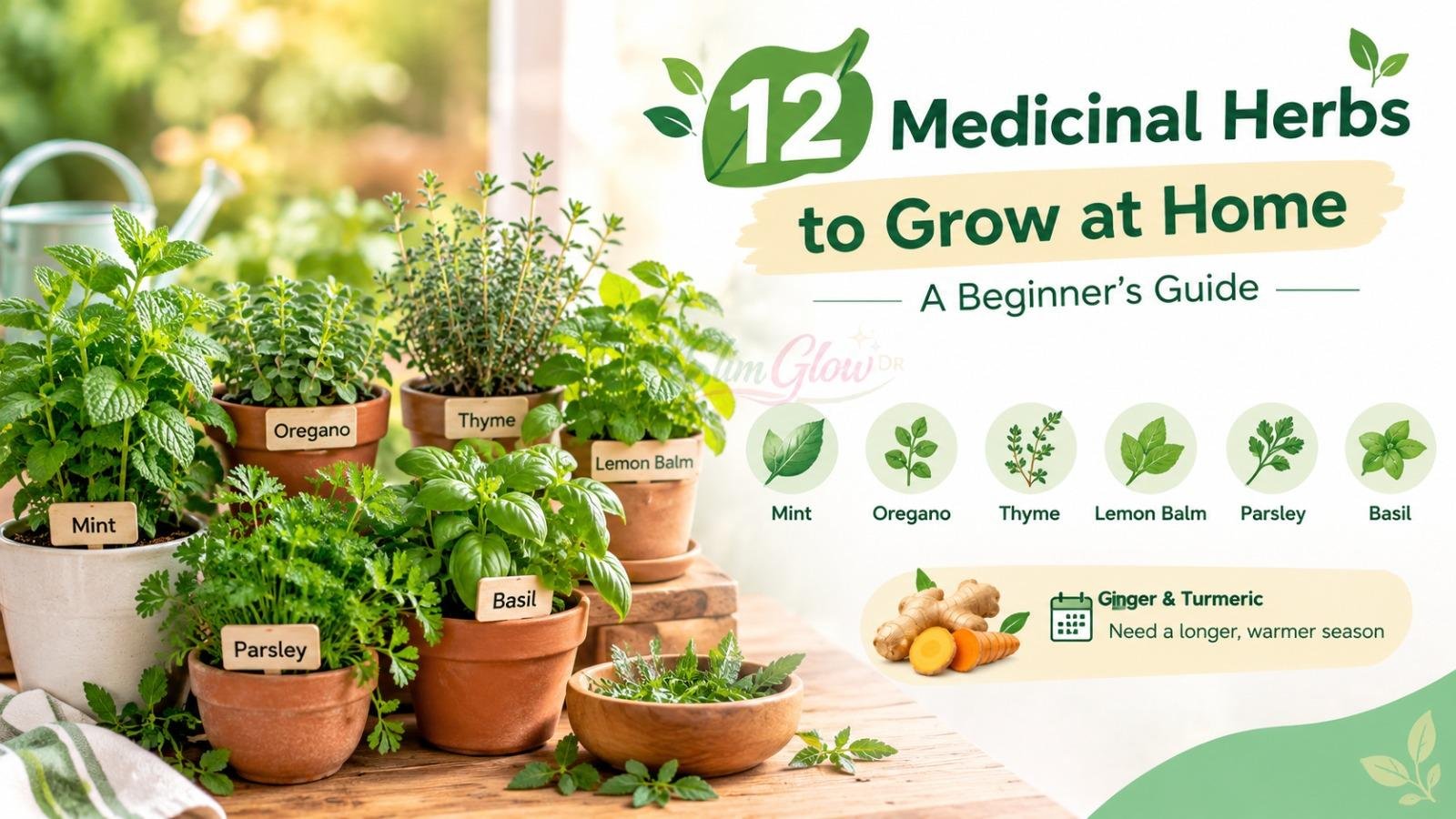
[VISUAL PLACEHOLDER: Hero photo of a small container herb garden on a sunny windowsill or balcony with mint, basil, rosemary, thyme, and lavender in pots; realistic, no pills or medical imagery; Alt text: Potted medicinal herbs including mint, basil, rosemary, and lavender growing on a sunny windowsill]
You want a few plants on the windowsill or patio that earn their space: something for tonight's pasta, something for an evening cup of tea, maybe something you've heard is good for digestion or sleep. Then you search for medicinal herbs to grow at home and find lists of "healing herbs" that promise ordinary kitchen plants can fix everything from colds to anxiety. Some of that is folklore, some comes from concentrated extracts you can't make in a kitchen, and a small part holds up in human studies.
This guide sorts it out for 12 beginner-friendly herbs. For each one, you'll find what it needs to grow, how people cook with it and have traditionally used it, what the science actually shows (with a simple evidence rating), and the safety points worth knowing. You'll also get a comparison table and a step-by-step section on harvesting, drying, labeling, and storing your herbs.
One expectation to set up front: these are mainly kitchen and tea herbs, and growing them doesn't replace medical care. There's a short medical disclaimer at the end for that reason.
Quick answer: The easiest medicinal herbs to grow at home for most beginners are mint (in its own pot), oregano, thyme (from a starter plant), lemon balm, parsley, and basil in warm weather. Ginger and turmeric are the most demanding because they need a long, warm season. Most medicinal uses are traditional; stronger human evidence exists for only a few, such as ginger supplements for pregnancy nausea.
Before You Start: Medicinal Herb Garden Basics for Beginners
A few rules apply to almost every herb on this list. Get these right and the individual plant notes below become fine-tuning rather than rescue work.
Sunlight, Soil, and Drainage
Most culinary herbs come from Mediterranean climates, so they want sun and soil that drains fast. Clemson Extension's herb growing guide recommends at least six hours of direct sun a day, while Iowa State Extension puts the minimum at four to six hours. A practical reading of both: give most herbs six or more hours, and expect mint, parsley, lemon balm, and chamomile to cope with less. Ginger and turmeric are the exceptions that actually prefer partial shade.
Soil matters as much as light. Aim for a slightly acidic to neutral pH (about 6 to 7) and avoid very rich, heavily fertilized beds, which tend to produce lush growth with weaker flavor. Herbs "perform poorly in wet, poorly drained sites," according to Iowa State, and that points to the most common beginner mistake: overwatering.
Soggy soil leads to root rot, especially in rosemary, thyme, sage, and lavender. Water thoroughly, then let the top of the soil dry before watering again, and use raised beds or containers if your ground stays wet.
Pots, Windowsills, or Garden Beds?
Container gardening suits most of these herbs, and it's often the easier option for beginners because you control the soil and can move plants to chase the sun. A few practical rules:
- Use drainage holes and a well-drained potting mix. Garden soil compacts in pots.
- Don't oversize the pot. Too much soil around a small root system stays wet for days.
- Give each species its own pot. Herbs with different watering needs (moist-loving mint next to dry-loving rosemary) won't both be happy.
If you mainly want medicinal herbs to grow indoors, light is the limiting factor. Iowa State Extension's guide to growing herbs indoors says most herbs need about eight hours of direct light, which usually means a south-facing window. Grow lights work well when placed 6 to 12 inches above the leaves and run 12 to 16 hours a day. Parsley, mint, oregano, thyme, and basil are among the easier indoor herbs. Rosemary, sage, and lemon balm are harder indoors because they need more light and tend to attract spider mites.
If you mainly want an herbal tea garden, mint, lemon balm, and chamomile are the core trio, with ginger as a longer-term project once you've had some success.
Seeds or plants? For thyme and rosemary, buy small plants or take cuttings, since both are slow and frustrating from seed. Mint is best started from a plant or cutting because seed doesn't reliably produce the same variety. Basil, parsley, and German chamomile grow well from seed. If you're weighing a seed kit, our medicinal seed kit review looks at one option in detail; it's built around a different mix of plants, so don't expect it to cover all 12 herbs in this guide.
Starting from seed? Read our full Medicinal Seed Kit review to see what is inside, what it costs, and who it suits before you buy.
Annuals, Perennials, and Your Climate
Knowing each herb's life cycle tells you what to expect after the first season:
- Annuals (basil, German chamomile) finish in one season. Basil dies at the first frost.
- Biennials (parsley) produce leaves in year one and flower in year two; most people replant every year.
- Perennials (mint, oregano, thyme, lemon balm, sage, lavender, Roman chamomile) come back each year in suitable climates.
- Tender perennials (rosemary in colder areas, ginger, turmeric) need protection or an indoor spot in areas with frosty winters.
In warm climates, rosemary and lavender may live outdoors year-round; in areas with hard freezes, growing them in pots you can bring inside is the safer bet. If you're in the US, the USDA hardiness zone map (updated in 2023) shows your area's average coldest winter temperature, which helps you judge whether a perennial will survive outdoors. UK gardeners can check a plant's RHS hardiness rating, which runs from H1a (needs a heated greenhouse) to H7 (very hardy).
How to Read the Evidence Ratings in This Guide
Every herb below gets one of four evidence labels for its medicinal uses:
[VISUAL PLACEHOLDER: Evidence-rating legend as a styled text box or small graphic showing the four levels below; Alt text: Evidence rating scale from traditional use only to moderate human evidence]
- Traditional use only: a long history of use, but little or no scientific testing.
- Lab or animal studies: promising in test tubes or animals, not shown in people.
- Limited human evidence: a few small or mixed human studies, often using extracts.
- Moderate human evidence: multiple human trials or systematic reviews support one specific use, in one specific form.
Two distinctions matter throughout. First, form: a study on a concentrated extract, a supplement capsule, or an essential oil tells you little about a tea made from garden leaves. Second, dose: the amount of herb in cooking is usually far smaller than the amounts used in studies. No herb on this list earns a "strong" rating for anything you can make at home.
Medicinal Herbs Comparison Table: Sunlight, Watering, Difficulty, and Uses
Use this medicinal herb garden plants list to shortlist what fits your space, light, and patience before reading the detailed profiles.
Caption: Comparison of 12 medicinal herbs to grow at home by sunlight, watering, difficulty, and indoor suitability.
| Herb | Sunlight | Watering | Difficulty | Grows indoors? |
|---|---|---|---|---|
| Mint (Mentha spp.) | Part shade to sun | Keep moist | Easy (own pot) | Yes, easy |
| Oregano (Origanum vulgare) | Full sun | Let dry between waterings; drought-tolerant | Easy | Yes, easy |
| Thyme (Thymus vulgaris) | Full sun | Dry, very well-drained | Easy from plants (slow from seed) | Yes, easy |
| Lemon balm (Melissa officinalis) | Sun or part shade | Moderate; well-drained | Easy (self-seeds and spreads) | Possible, harder |
| Parsley (Petroselinum crispum) | Sun to light shade | Keep moist | Easy to moderate (slow to germinate) | Yes, easy |
| Basil (Ocimum basilicum) | Full sun, warmth | Moist, well-drained | Easy in warm weather; frost kills it | Possible with strong light and warmth |
| Rosemary (Salvia rosmarinus) | Full sun | Dry, sharp drainage | Moderate (buy a plant or take cuttings) | Harder |
| Sage (Salvia officinalis) | Full sun | Dry, excellent drainage | Easy to moderate | Harder |
| Chamomile (Matricaria chamomilla / Chamaemelum nobile) | Sun or part shade | Moderate; well-drained | Easy to moderate from seed | Usually grown outdoors |
| Lavender (Lavandula angustifolia) | Full sun | Low; excellent drainage | Moderate | Usually grown outdoors |
| Ginger (Zingiber officinale) | Partial shade | Moist, not soggy | Challenging (8 to 10 months, needs warmth) | Container yes; overwinter indoors |
| Turmeric (Curcuma longa) | Partial to full shade | Moist, rich soil, not soggy | Challenging (long warm season) | Container yes |
The detailed profiles below follow the same order, from easiest to most demanding.
12 Medicinal Herbs to Grow at Home (Growing Needs, Uses, Evidence, and Safety)
Each profile covers four things: growing requirements, culinary and traditional uses, what the science says, and safety notes, including a one-line pet note based on the ASPCA's toxic plant list where the ASPCA lists the herb.
1. Mint (Mentha spp., including peppermint, Mentha × piperita)
At a glance: Light: Part shade to sun | Water: Keep moist | Difficulty: Easy (own pot) | Indoors: Yes, easy | Evidence: Traditional (leaf/tea); moderate for peppermint oil capsules in IBS
Growing requirements: Mint is the most forgiving herb here. It tolerates partial shade, likes rich, consistently moist soil, and grows so vigorously that it should always have its own container. Some gardeners sink the pot partly into a bed to keep the roots from escaping. Start from a plant or cutting, and harvest often to delay flowering; you'll usually get a second cutting later in the season.
Culinary and traditional uses: Fresh mint tea, salads, sauces, drinks, and desserts. Traditionally, peppermint has been used to settle digestion.
What the science says: This is where form really matters. According to NIH's peppermint oil fact sheet, a 2022 review of 10 studies with 1,030 participants found that peppermint oil in enteric-coated capsules outperformed placebo for overall irritable bowel syndrome (IBS) symptoms and abdominal pain. Its active compound, menthol, is concentrated in that oil. Peppermint leaf is a different story: NCCIH notes that very little research has been done on it. European regulators recognize peppermint leaf tea for indigestion and gas based on traditional use, while stating there is insufficient clinical trial evidence. Evidence rating: Traditional use only (leaf and tea). Moderate human evidence applies only to enteric-coated peppermint oil capsules for IBS.
Safety notes: Peppermint may worsen heartburn or reflux, and the European Medicines Agency herbal monograph advises caution for people with gallstones or other bile problems. It also advises seeing a doctor if digestive symptoms last more than two weeks. Peppermint tea appears safe for most adults, and food amounts are likely fine in pregnancy. Never apply peppermint oil to the face of an infant or young child. Pet note: The ASPCA lists mint as toxic to dogs, cats, and horses; large amounts can cause vomiting and diarrhea.
2. Oregano (Origanum vulgare)
At a glance: Light: Full sun | Water: Let dry between waterings | Difficulty: Easy | Indoors: Yes, easy | Evidence: Lab or animal studies
Growing requirements: A hardy perennial that thrives on neglect. Give it full sun and lean, well-drained soil, and let it dry out between waterings. It reaches about 2 feet tall, does well in containers, and is one of the easier herbs indoors. Clip it back regularly, because flowering can dull the flavor.
Culinary and traditional uses: A staple of Mediterranean cooking, and one of the few herbs many cooks prefer dried. Traditionally used for coughs and digestion.
What the science says: Oregano oil is rich in carvacrol and thymol, which show strong antimicrobial activity in laboratory studies. Test-tube results, though, aren't a treatment: a comprehensive review of carvacrol concluded that human trials are still lacking, which prevents conclusions about clinical relevance. Evidence rating: Lab or animal studies.
Safety notes: Cooking amounts are generally fine. People allergic to other mint-family (Lamiaceae) plants may react to oregano too. Be skeptical of "oil of oregano" products marketed as natural antibiotics; essential oils are highly concentrated and shouldn't be swallowed unless a clinician has directed you to a specific product. Pet note: The ASPCA lists oregano as toxic to dogs, cats, and horses, typically causing mild vomiting and diarrhea.
3. Thyme (Thymus vulgaris)
At a glance: Light: Full sun | Water: Dry, very well-drained | Difficulty: Easy from plants (slow from seed) | Indoors: Yes, easy | Evidence: Traditional use only
Growing requirements: Thyme is easy once established but notoriously slow from seed, so a starter plant or cutting is the beginner's shortcut. It wants full sun and very well-drained soil that stays on the dry side; wet roots are what usually kill it. Upright, smooth-leaved types cope better with heat and humidity. It grows well on a sunny windowsill.
Culinary and traditional uses: Soups, roasts, stews, and marinades. Traditionally used for coughs.
What the science says: The European Medicines Agency's herbal committee concluded that thyme preparations can be used for chesty coughs associated with colds, based on long-standing use. Those are standardized thyme preparations sold as traditional herbal medicines in the EU, not garden sprigs, and the agency found insufficient evidence from clinical trials. Evidence rating: Traditional use only.
Safety notes: Culinary amounts are generally fine. Thyme medicines must not be used by people allergic to thyme or other Lamiaceae plants, and most are approved only for those over 12. See a doctor if a cough lasts more than a week or gets worse. Pet note: The ASPCA lists thyme as non-toxic to dogs, cats, and horses.
4. Lemon Balm (Melissa officinalis)
At a glance: Light: Sun or part shade | Water: Moderate, well-drained | Difficulty: Easy (self-seeds and spreads) | Indoors: Possible, harder | Evidence: Limited human evidence (extracts)
Growing requirements: For lemon balm growing, think "mint with manners, mostly." It's an easy perennial about 1.5 feet tall that grows in sun or partial shade in well-drained soil. It self-sows readily and can become invasive, so cutting off the flowers before they set seed keeps it in check. You can pick fresh leaves any time; for drying, harvest just before flowering. It's possible indoors but harder, since it needs strong light and attracts spider mites.
Culinary and traditional uses: A lemony herbal tea, fruit salads, and desserts. Traditionally used for calm, sleep, and mild digestive upset.
What the science says: A 2021 meta-analysis of randomized trials (Ghazizadeh et al.) found lemon balm improved anxiety and depressive symptoms compared with placebo, without serious side effects. The authors warned that results should be interpreted with caution because the trials were few, small, and very different from one another, and most used extracts or capsules rather than tea. The EMA recognizes melissa leaf for mild stress and to aid sleep on the basis of traditional use. Like several mint-family herbs, it contains rosmarinic acid. Evidence rating: Limited human evidence (extracts); tea from garden leaves falls under traditional use.
Safety notes: Some drug references caution that lemon balm might add to the effect of sedating medicines and could theoretically affect thyroid medication; this hasn't been demonstrated in clinical studies, but if you take either, check with your pharmacist. Little is known about medicinal amounts in pregnancy, so ask your clinician. The EMA advises seeing a doctor if stress, sleep, or digestive symptoms persist beyond two weeks. Pet note: The ASPCA lists lemon balm as non-toxic to dogs, cats, and horses.
5. Parsley (Petroselinum crispum)
At a glance: Light: Sun to light shade | Water: Keep moist | Difficulty: Easy to moderate (slow to germinate) | Indoors: Yes, easy | Evidence: Traditional use only
Growing requirements: Parsley, a member of the carrot family (Apiaceae), is a biennial usually grown as an annual. It likes rich, moist soil and full sun to light shade. Its main quirk is slow germination, so start seed indoors about eight weeks before transplanting, or simply buy transplants. Choose flat-leaf (Italian) for flavor or curled (French) for garnish. It's cold-hardy and one of the easiest herbs to grow indoors.
Culinary and traditional uses: Salads, tabbouleh, sauces, and garnishes. Traditionally used as a diuretic.
What the science says: There's no good clinical evidence for parsley's traditional medicinal uses. Its real value is as a food: it's a good source of vitamin K. Evidence rating: Traditional use only (for medicinal uses).
Safety notes: Normal food amounts are generally considered fine. If you take warfarin, NIH advises keeping your vitamin K intake about the same each day, so the goal is consistency rather than avoidance; talk with your clinician before changing how much parsley you eat. During pregnancy, avoid medicinal amounts, parsley oil, and seed preparations, which contain apiol and myristicin. Pet note: The ASPCA lists parsley as toxic to dogs, cats, and horses because of compounds that can cause sun sensitivity, though large amounts are needed to cause this effect.
6. Basil (Ocimum basilicum)
At a glance: Light: Full sun, warmth | Water: Moist, well-drained | Difficulty: Easy in warm weather | Indoors: Possible with strong light and warmth | Evidence: Traditional use only
Growing requirements: Basil is easy as long as it's warm. It's a tender annual that needs full sun and rich, well-drained soil, and the first fall frost kills it. Sow seed indoors four to six weeks before your last frost, or outdoors once nights stay warm; you can start harvesting about six weeks after planting. Pinch off flowers as soon as they appear, because a flowering (bolting) plant puts out fewer leaves. Indoors, it needs lots of light and warmth to do well.
Culinary and traditional uses: Pesto, tomato dishes, salads, and occasionally tea.
What the science says: No meaningful human research supports medicinal uses of sweet basil. Be careful with online claims here: many are borrowed from holy basil (tulsi, Ocimum tenuiflorum), a different species. A systematic review of tulsi found 24 human studies, but those findings don't apply to the basil in your pesto. Evidence rating: Traditional use only (sweet basil).
Safety notes: Concentrated basil oils contain estragole, which European regulators advise limiting for young children and during pregnancy and breastfeeding; normal cooking amounts aren't the concern. Pet note: The ASPCA lists basil as non-toxic to dogs and cats.
7. Rosemary (Salvia rosmarinus, formerly Rosmarinus officinalis)
At a glance: Light: Full sun | Water: Dry, sharp drainage | Difficulty: Moderate | Indoors: Harder | Evidence: Limited human evidence (aroma studies)
Growing requirements: Rosemary is an evergreen shrub that wants full sun, dry conditions, and sharp drainage; soggy roots kill it faster than neglect does. Cold hardiness varies by variety, so in colder areas choose hardier cultivars such as 'Arp' or 'Hill Hardy', or grow it in a pot and overwinter it in a sunny window. Buy a plant or root stem cuttings rather than starting from seed. It's one of the harder herbs to keep healthy indoors because of its high light needs and susceptibility to spider mites.
Culinary and traditional uses: Roast vegetables, meats, breads, and aromatic sachets. Traditionally associated with memory. If you make rosemary-infused oil, treat it as a fresh food: homemade herb-in-oil can support botulism bacteria, so extension guidance on herb-infused oils says to refrigerate it, use it within two to three days, and discard it if it sits at room temperature for more than two hours.
What the science says: In a small 2012 study, 20 volunteers did cognitive tests in a room scented with rosemary essential oil; higher blood levels of an aroma compound (1,8-cineole) tracked with better speed and accuracy. That design shows a correlation, not cause and effect, and it involved inhaled oil, not eaten leaves. Rosemary also contains rosmarinic acid, though that doesn't establish any health effect from culinary use. Evidence rating: Limited human evidence (aroma studies); eating the leaves is culinary and traditional use.
Safety notes: Food amounts are fine. New Zealand's medicines regulator lists rosemary oil among essential oils linked to seizures, which can rarely occur in young children and people with epilepsy. During pregnancy, ask a clinician before using medicinal amounts or the oil. Pet note: The ASPCA lists rosemary as non-toxic to dogs, cats, and horses.
8. Sage (Salvia officinalis)
At a glance: Light: Full sun | Water: Dry, excellent drainage | Difficulty: Easy to moderate | Indoors: Harder | Evidence: Limited human evidence (extracts)
Growing requirements: Sage is a small evergreen shrub that needs full sun, excellent drainage, and dry soil; it's drought-tolerant once established and grows well in containers. It can struggle in humid or coastal climates, where the broad-leaved 'Berggarten' tends to hold up better. Plants get woody over time, and many gardeners replace them every few years for better leaf production. Indoors, it's on the harder list.
Culinary and traditional uses: Stuffing, brown butter sauces, beans, and sage tea. Traditionally used for sore throats and menopausal hot flashes.
What the science says: NIH's sage fact sheet says only small amounts of research exist. A few small studies suggest sage may reduce how often hot flashes occur, and a few suggest it may improve memory or thinking scores, but the evidence is limited. One commonly cited hot-flash trial reported a large drop in symptom intensity over eight weeks, but it had no placebo group and was linked to the product's manufacturer. Most studies used extracts or tablets. Evidence rating: Limited human evidence (extracts).
Safety notes: Sage is likely safe in food amounts. It contains thujone, which can be toxic in large amounts, so high doses or long-term medicinal use may be unsafe. NCCIH says sage may be unsafe in pregnancy, and little is known about breastfeeding. Sage essential oil is on the same seizure-related list as rosemary oil. Pet note: The ASPCA lists sage as non-toxic to dogs, cats, and horses.
9. Chamomile (German, Matricaria chamomilla; Roman, Chamaemelum nobile)
At a glance: Light: Sun or part shade | Water: Moderate, well-drained | Difficulty: Easy to moderate from seed | Indoors: Usually grown outdoors | Evidence: Limited human evidence (anxiety, extracts); none for sleep
Growing requirements: If you're learning how to grow chamomile for tea, start with German chamomile. It's a cool-season annual about 18 inches tall that grows easily from seed sown in early spring, takes sun or partial shade, and reseeds itself. Roman chamomile is a low perennial ground cover that prefers partial shade, cooler conditions, and moderately moist soil. Tea uses the flower heads, not the leaves, so expect frequent, fiddly picking through the blooming season. It's usually grown outdoors.
Culinary and traditional uses: Mainly tea. Traditionally used for sleep, relaxation, and digestion.
What the science says: The sleep evidence is thin. NIH's chamomile fact sheet notes that a 2019 review found just one insomnia study, which found no benefit. For anxiety, preliminary studies suggest a chamomile supplement might help generalized anxiety disorder. In one longer trial, people who responded to a chamomile extract and kept taking it relapsed less often than those switched to placebo (15.2% vs 25.5%), but the difference wasn't statistically significant. Chamomile contains apigenin, a compound often mentioned in relaxation claims, but these trials used extract capsules, not tea. Evidence rating: Limited human evidence (anxiety, extracts); no good evidence for sleep; tea is traditional use.
Safety notes: People allergic to ragweed or related plants (the Asteraceae family) are more likely to react, and reactions can include severe allergic reactions and anaphylaxis. Interactions with warfarin have been reported, including a published case of internal bleeding. Little is known about safety in pregnancy or breastfeeding. Pet note: The ASPCA lists chamomile (its entry is for Roman chamomile) as toxic to dogs, cats, and horses; treat German chamomile with the same caution.
10. Lavender (Lavandula angustifolia)
At a glance: Light: Full sun | Water: Low, excellent drainage | Difficulty: Moderate | Indoors: Usually grown outdoors | Evidence: Traditional use only (garden); moderate for one oral capsule
Growing requirements: Lavender needs full sun, gritty, very well-drained soil, and little water; overwatering is the usual cause of death. English lavender, including 'Hidcote' and 'Munstead', is the hardiest choice for cold winters, but it struggles in hot, humid summers, where lavandins such as 'Provence' or 'Grosso' cope better. Raised beds with gravel mulch help. Cut whole flower spikes just before the florets fully open. It's usually grown outdoors.
Culinary and traditional uses: Sachets, aroma, and sparing use in baking or teas (choose culinary varieties and use a light hand). Traditionally used for calm.
What the science says: The strongest data are for Silexan, a specific, standardized oral lavender oil capsule. A 2023 meta-analysis of five placebo-controlled trials with 1,213 adults found it reduced anxiety scores more than placebo, though most of the trials have ties to the manufacturer. NIH's lavender fact sheet says the oral product "might be beneficial" and that it's unclear whether lavender aromatherapy helps anxiety or stress. None of this applies to garden flowers, sachets, or homemade oils. Lavender's scent comes largely from linalool and linalyl acetate. Evidence rating: Traditional use only (garden lavender); moderate human evidence for the Silexan capsule only.
Safety notes: Don't swallow lavender essential oil, and don't try to make an oral lavender oil at home. Topical products can cause skin reactions, and lavender may theoretically add to the effect of sedatives. A few cases of breast-tissue swelling have been reported in children using topical lavender products; it isn't clear lavender caused them, but it's a reason to avoid using the oil on children without advice. Pet note: The ASPCA lists lavender as toxic to dogs, cats, and horses.
11. Ginger (Zingiber officinale)
At a glance: Light: Partial shade | Water: Moist, not soggy | Difficulty: Challenging (8 to 10 months) | Indoors: Container yes; overwinter indoors | Evidence: Moderate (pregnancy nausea, supplements)
Growing requirements: Ginger is a tropical rhizome and a real project for beginners. It prefers partial shade (too much sun stunts it and browns the leaf tips), well-drained soil rich in organic matter, and steady moisture without sogginess. Plant 1- to 1.5-inch rhizome pieces about an inch deep in spring after frost, letting cut pieces dry for a few days first to prevent rot. According to UF/IFAS Extension's ginger growing guide, it's an excellent container plant and takes about 8 to 10 months to mature. Use a pot at least 8 inches deep and bring it indoors before cold weather. Harvest when the tops die back, or dig some young ginger earlier for a milder flavor.
Culinary and traditional uses: Stir-fries, baking, and fresh ginger tea. Traditionally used for nausea and digestion.
What the science says: Ginger has one of the best-supported uses on this list. A systematic review of ginger for nausea pooled 12 randomized trials with 1,278 pregnant women and found ginger significantly improved nausea compared with placebo, though it didn't significantly reduce vomiting. Most of those trials used capsules. NIH's ginger fact sheet says it's uncertain whether ginger helps with chemotherapy or post-surgery nausea, and most studies haven't found it helpful for motion sickness. Researchers often point to gingerols as key active compounds. Evidence rating: Moderate human evidence for pregnancy-related nausea (supplements); limited for other uses.
Safety notes: Common side effects include heartburn, stomach discomfort, and mouth irritation. Ginger can affect blood clotting, and Memorial Sloan Kettering's ginger monograph advises people on warfarin or other blood thinners not to take ginger supplements; the evidence is mixed, but case reports exist. If you're pregnant, talk with your provider before using supplemental amounts.
12. Turmeric (Curcuma longa)
At a glance: Light: Partial to full shade | Water: Moist, rich soil, not soggy | Difficulty: Challenging (long warm season) | Indoors: Container yes | Evidence: Limited human evidence (curcumin supplements, knee osteoarthritis)
Growing requirements: Turmeric is ginger's demanding cousin; both belong to the ginger family (Zingiberaceae). It grows well in partial to full shade in soil amended with organic matter. Plant 1- to 1.5-inch rhizome pieces, each with a bud or "eye," about an inch deep in early spring after letting them dry for a few days. The UF/IFAS guide to growing turmeric notes that rhizomes are usually ready in late fall or early winter, when the foliage dies back and the plant goes dormant, so plan on most of a year from planting to harvest. In cooler climates, grow it in a container about 12 inches deep that can come indoors.
Culinary and traditional uses: Curries, rice, and golden milk. Traditionally used for inflammation.
What the science says: Most research uses concentrated curcumin supplements, often combined with black pepper extract (piperine) because curcumin is poorly absorbed on its own. NIH's turmeric fact sheet calls the early evidence for knee osteoarthritis pain and function positive but says higher-quality research is needed, and that "we don't know enough" to conclude it's beneficial for any health purpose.
A 2021 systematic review of 10 trials looked at extracts for knee osteoarthritis, but a later appraisal judged the reviews in this area to be of extremely low methodological quality. These studies used concentrated supplements; there's no evidence that the amounts used in cooking have the same effects. Evidence rating: Limited human evidence (curcumin supplements, knee osteoarthritis).
Safety notes: Cooking with turmeric is a different matter from taking supplements. Liver injury has been reported with supplements, particularly highly absorbable formulations; see the reports of liver injury linked to turmeric supplements. Stop and contact a provider if you notice fatigue, dark urine, or yellowing skin. Memorial Sloan Kettering advises against turmeric supplements with blood thinners, aspirin, or ibuprofen, and suggests people prone to kidney stones check with a physician. Turmeric supplements may be unsafe during pregnancy.
How to Harvest, Dry, Label, and Store Herbs Safely
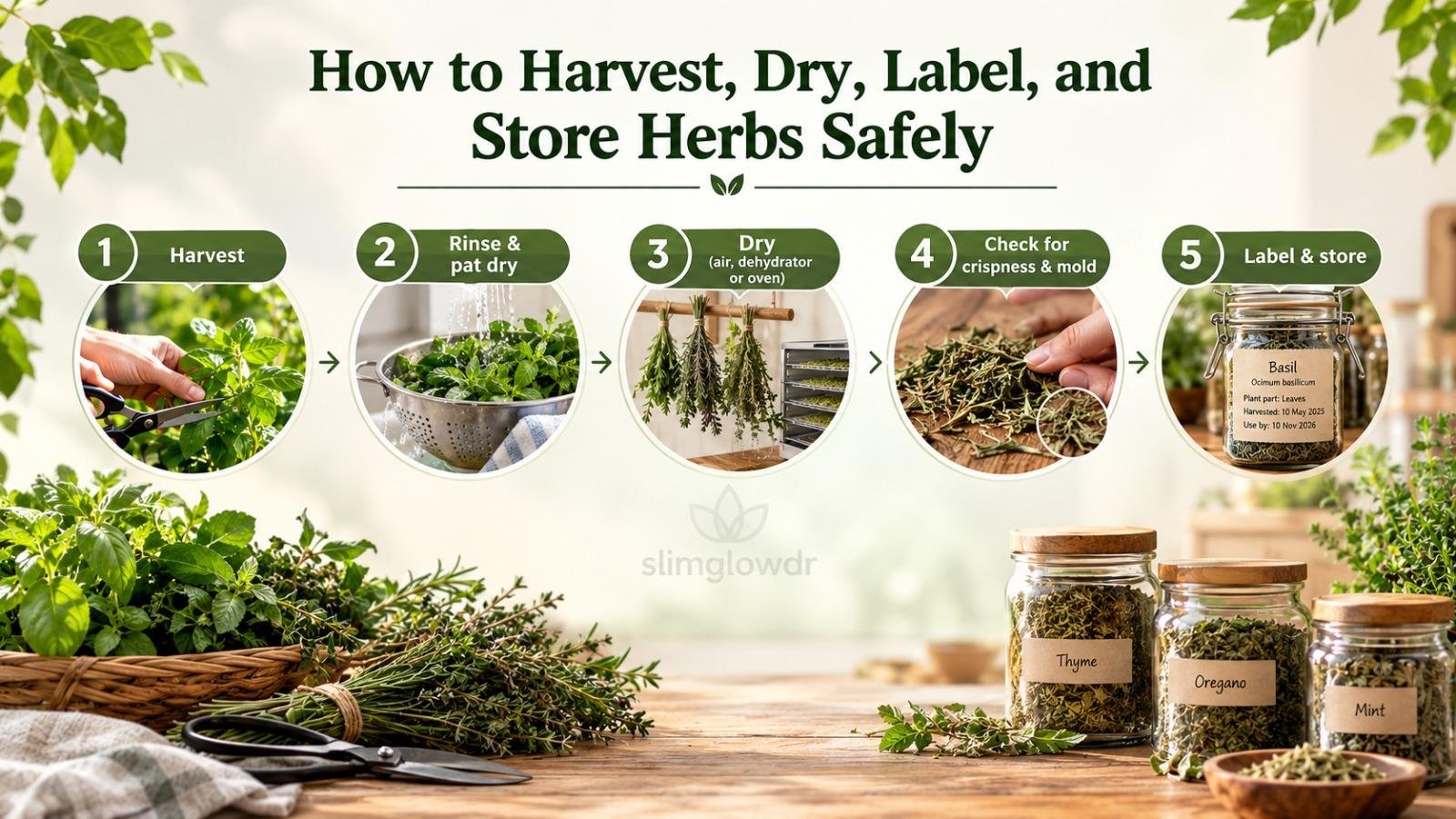
Growing the plant is half the job. Handling herbs carefully after harvest protects flavor and prevents mold, which is the main food-safety risk with home-dried herbs.
[VISUAL PLACEHOLDER: Five-step infographic: (1) Harvest, (2) Rinse and pat dry, (3) Dry by air, dehydrator, or oven, (4) Check for crispness and mold, (5) Label and store in an airtight jar. Include an example label showing herb name, botanical name, plant part, harvest date, and use-by date; Alt text: Five steps to harvest, dry, label, and store homegrown herbs safely]
When and How to Harvest
- Pick in the morning after the dew has dried and before the day gets hot.
- Harvest leafy herbs just before flowering. The food-safety guidance on drying herbs from the National Center for Home Food Preservation describes this as the "bursting bud stage," when flavor is at its peak.
- Follow the one-third rule for perennials. The one-third harvesting rule from Illinois Extension says to remove about a third of a perennial's growth at a time; annuals like basil can be cut back by 50 to 75 percent.
- Treat flowers and roots differently. Cut lavender spikes just before the florets fully open, pick chamomile flower heads through the blooming season, and dig ginger and turmeric once the foliage fades in fall.
- Use clean, sharp tools and avoid bruising leaves or leaving cut herbs in the sun.
Only harvest plants you've grown or positively identified, and never use herbs treated with pesticides that aren't labeled for food crops.
Rinsing and Prepping
Rinse herbs in cool water, shake gently, and pat them dry thoroughly. Discard bruised, soiled, yellowed, or insect-damaged leaves and stems. Excess surface water slows drying and raises the risk of mold, so take your time with this step.
Three Ways to Dry Herbs at Home (Air, Dehydrator, Oven)
If you're figuring out how to dry herbs at home, choose the method that fits the herb and your kitchen:
- Air drying: Best for sturdy herbs such as rosemary, sage, thyme, and parsley. Tie five to eight stems in small bundles and hang them somewhere dark, warm (about 70 to 80°F), and well ventilated. Expect two to four weeks. Tender, moist herbs such as basil, oregano, lemon balm, and mint can mold if dried slowly, so hang them in a small bunch inside a paper bag with holes punched in it, one bunch per bag. Sun drying isn't recommended because it fades color and flavor.
- Dehydrator: A fast option with good temperature control. Preheat to 95 to 115°F (up to 125°F in humid areas), spread herbs in a single layer, and check them periodically; drying usually takes one to four hours.
- Oven: Use a very cool oven. Extension guidance notes that the light of an electric oven or the pilot light of a gas oven gives off enough heat for overnight drying. Lay leaves on paper towels so they don't touch.
For very small batches, Oregon State Extension also describes microwave drying: no more than one to two cups at a time between plain white paper towels, in short bursts, then finishing at room temperature.
Ginger and turmeric are usually used fresh, and the extension sources behind this guide focus on drying leaves and flowers, so this guide doesn't cover drying rhizomes.
How to Tell Herbs Are Fully Dry (and Avoid Mold)
Herbs are dry when the leaves crumble easily between your fingers and the stems snap rather than bend. Let them cool completely before packing, because warm herbs "sweat" in a jar. Glass jars make moisture easy to spot, so check them over the first few days: if you see condensation, re-dry the herbs. Discard anything that looks moldy, smells musty, or has discolored.
How to Label Your Herbs
Once dried, many herbs look alike, especially crumbled green leaves. A practical label includes:
- Common name and botanical name (for example, "Lemon balm, Melissa officinalis")
- Plant part (leaf, flower, or rhizome)
- Harvest date and drying method
- A use-by date, about 6 to 12 months after harvest
Clear labels prevent mix-ups, help you rotate stock, and make it easy to tell a clinician or pharmacist exactly what you've been using.
How to Store Dried Herbs and How Long They Last
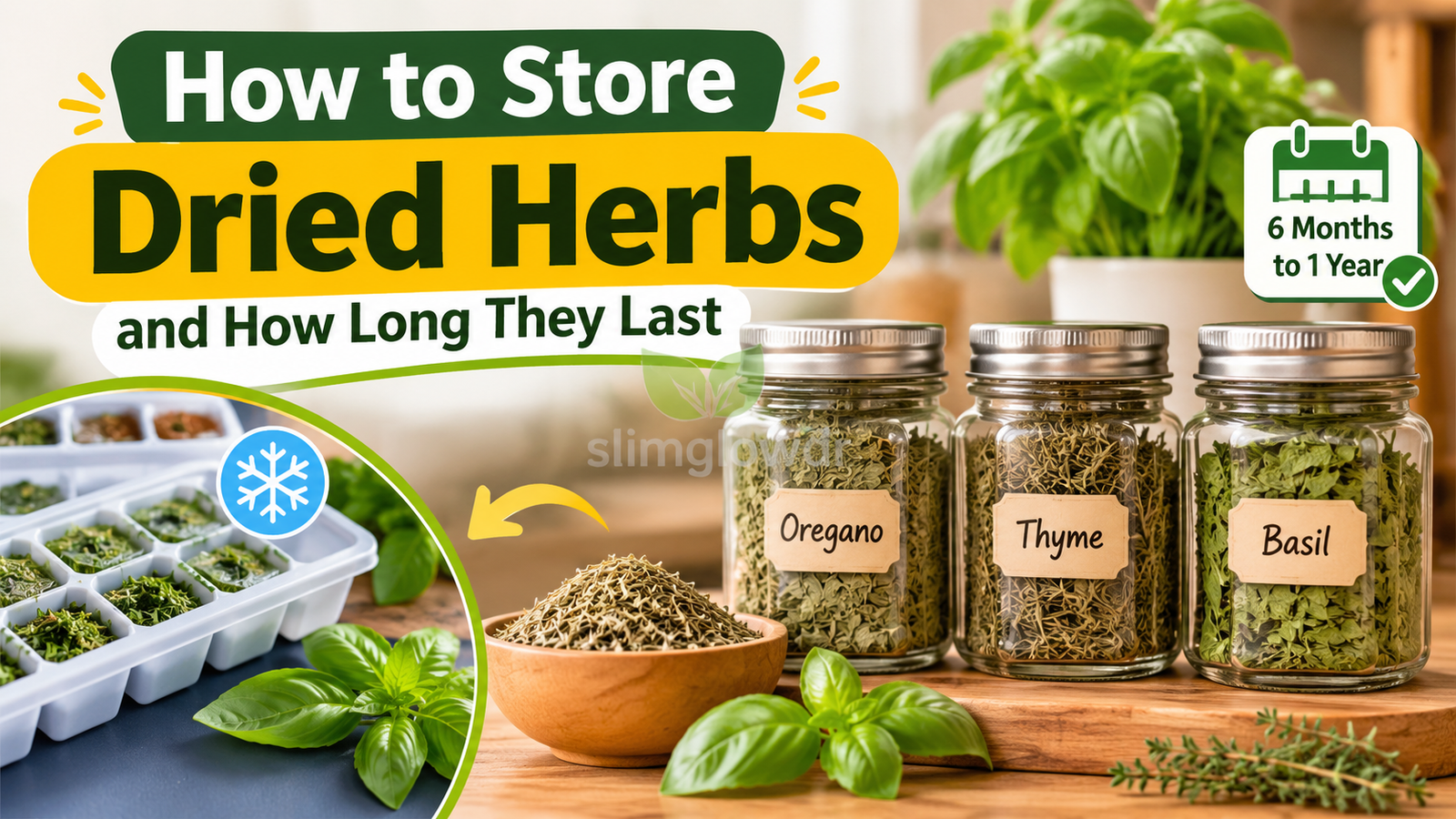
For how to store dried herbs, keep them in clean, airtight glass jars in a cool, dry, dark cupboard away from the stove and sunny windows. Store leaves whole and crush them just before use, since whole leaves hold their flavor longest. Oregon State Extension recommends using dried herbs within six months to a year for best flavor; that's a quality window rather than a safety deadline, though anything musty or moldy should go. Keep jars out of reach of children and pets.
Freezing works well for herbs that lose flavor when dried, such as basil and parsley. Rinse, chop coarsely, and freeze in ice cube trays topped up with water. Skip freezing herbs in oil, since thawed herb-in-oil raises the same botulism concern as fresh infused oils.
Using Homegrown Herbs Safely: What to Know Before You Brew
Are homegrown herbs safe to use as remedies? In cooking amounts, these 12 are generally fine for most people. The risks rise with concentrated forms, regular medicinal use, and certain health situations. This section pulls the key cautions into one place.
Herbs and Medications
NCCIH's general advice is simple: if you take any medicine, talk with your health care provider before using any herbal product. The interactions most relevant to this list:
- Blood thinners (such as warfarin) and antiplatelet drugs: ginger and turmeric supplements; chamomile (reported interactions with warfarin); parsley, because changes in vitamin K intake affect warfarin.
- Sedating medicines: lavender may theoretically add to their effect; lemon balm might as well, according to some drug references.
- Thyroid medication: some references raise a theoretical concern with lemon balm.
Tell your doctor or pharmacist about regular herbal teas as well as supplements; teas are easy to forget.
Pharmacist’s note: The herbs people forget to mention are the ones they think of as food, and tea comes first. A daily cup of chamomile or ginger tea doesn’t feel like “medicine,” so it rarely makes it onto a medication list, yet it can matter if you take blood thinners, diabetes medicines, or anything with a narrow safety margin. When you see your doctor or pharmacist, say the tea out loud, and bring supplements and essential oils too.
Pregnancy, Breastfeeding, and Children
Culinary amounts and medicinal amounts are treated very differently. NCCIH says sage and turmeric supplements may be unsafe in pregnancy, and ginger supplements may be safe but should be discussed with a provider first. Little is known about medicinal amounts of chamomile, lavender, or peppermint in pregnancy. Avoid medicinal amounts of parsley and rosemary, as well as parsley oil and seed preparations.
For children, never use peppermint oil on an infant's or young child's face, avoid rosemary and sage essential oils, and don't use lavender oil on children without advice. Many European herbal medicines from these plants are approved only for adults and teens.
Allergies
Chamomile is the biggest allergy concern: people allergic to ragweed and other Asteraceae plants are more likely to react, sometimes severely. Eight herbs here belong to the mint family (Lamiaceae): mint, oregano, thyme, lemon balm, basil, rosemary, sage, and lavender. If you've reacted to one, be cautious with the others.
Essential Oils Are Not the Same as Leaves
An essential oil packs the volatile compounds of a large amount of plant into a few drops. That concentration is why peppermint oil capsules show effects that mint tea doesn't, and also why oils carry risks that leaves don't and several oils are toxic to pets. Don't swallow essential oils unless a clinician directs you to a specific product, and store them out of reach of children and pets. This guide intentionally doesn't cover making tinctures, extracts, or homemade essential oils.
Keeping Pets Safe Around Your Herb Garden
Five herbs in this guide are listed by the ASPCA as toxic to dogs, cats, and horses: mint, oregano, parsley, chamomile (the ASPCA entry is for Roman chamomile, so treat German chamomile the same way), and lavender. Thyme, lemon balm, rosemary, and sage are listed as non-toxic to all three, and basil as non-toxic to dogs and cats. "Non-toxic" doesn't mean a pet can graze freely, since any plant material can upset a dog's or cat's stomach. Keep pots out of reach, and if a pet eats something concerning, call your vet or the ASPCA Animal Poison Control Center at (888) 426-4435.
Can Medicinal Herbs Help With Weight or Metabolic Health?
Not directly, based on current evidence. Herbs add a lot of flavor for very few calories, and some people find that a pot of basil or rosemary by the door makes home-cooked meals with less salt and sugar more appealing. That's a practical benefit, not a metabolic effect.
Direct evidence that herbs cause weight loss is limited and mostly involves supplements. A 2019 meta-analysis of 14 trials in 473 adults with overweight or obesity found a small, borderline reduction in body weight with ginger supplements and no significant change in BMI. A larger 2024 meta-analysis of 27 trials also reported reductions with ginger supplements but rated the certainty of the evidence for body weight as low. We found no reliable evidence that cooking with turmeric affects weight. In short, no herb on this list burns fat.
For a deeper look, read what the evidence says about herbs for weight loss. Herbs work best as one part of a broader routine; our guide to practical ways to support your metabolism covers the bigger levers.
Key Takeaways
- Start with the "Easy" rows in the comparison table; mint needs its own pot.
- Ginger and turmeric are rewarding but need warmth, shade, and most of a year.
- Most medicinal uses are traditional; ginger for pregnancy nausea is among the better-supported uses, and many studies test extracts or oils rather than garden leaves.
- Dry herbs completely, label them with name, plant part, and date, store them airtight in the dark, and use within 6 to 12 months for best flavor.
- Check with a clinician if you're pregnant, breastfeeding, taking medication, or have plant allergies.
Start Small and Grow From There
The best medicinal herbs to grow at home are the ones you'll actually use and keep alive. Pick two or three herbs from the table based on how you'll use them, say one for tea and one for the dishes you cook most often, and get comfortable with light, watering, and harvesting before adding more demanding plants like lavender or ginger. Enjoy them for flavor and ritual, treat bold health claims with the skepticism the evidence warrants, and handle every harvest carefully from cutting board to jar.
Want a printed home-remedy reference on your shelf? Read our review of The Home Doctor book to see whether it is worth adding, and why it still says to see a professional for anything serious.
Related reading: More natural home guides | More natural remedies articles
Medical disclaimer: This article is for general educational purposes only and is not medical advice. Herbs can interact with medications and may not be suitable during pregnancy, while breastfeeding, for children, or for people with certain health conditions. Talk to your doctor or pharmacist before using any herb for a health purpose, and seek medical care for symptoms that are severe or don't improve.
Frequently Asked Questions
What is the easiest medicinal herb to grow at home?
Mint is the easiest for most beginners. It tolerates partial shade, grows fast, and bounces back from heavy harvesting. Keep it in its own pot so it doesn't spread. Oregano, thyme (from a starter plant), lemon balm, and parsley are also easy medicinal herbs to grow for beginners, and basil is easy once the weather is warm.
Which medicinal herbs can I grow indoors?
Parsley, mint, oregano, thyme, and basil are the most reliable medicinal herbs to grow indoors, given a bright south-facing window or a grow light. Rosemary, sage, and lemon balm are possible but harder because they need more light and attract spider mites. Ginger and turmeric can grow in containers that move indoors for cold months.
Can I grow ginger and turmeric from store-bought roots?
For ginger, often yes; for turmeric, it is less certain. UF/IFAS Extension notes that supermarket ginger works for small plantings (its guidance on this point is specific to ginger). Some conventional rhizomes are treated to stop sprouting, so organic rhizomes or seed rhizomes are a safer bet, and soaking them overnight may help. Choose plump pieces with visible buds, let cut pieces dry for a few days, then plant them about an inch deep.
How long do dried herbs last?
For best flavor, use dried herbs within six months to a year. Whole leaves keep their flavor longer than crushed ones, so crumble them just before use. Older herbs aren't necessarily unsafe, but they lose flavor, and anything musty or moldy should be thrown out. See "How to Store Dried Herbs" above for jar and storage tips.
Is it safe to use homegrown herbs as medicine?
In normal cooking and tea amounts, these 12 herbs are generally safe for most healthy adults, but they aren't a substitute for medical treatment. Tell your doctor or pharmacist about any herbs you use regularly, and see the safety section above for cautions on medications, pregnancy, allergies, and concentrated forms.
Are herbal teas safe during pregnancy?
Some are likely fine in food amounts, but medicinal amounts need a clinician's input. NCCIH considers peppermint likely safe in food amounts, while sage and turmeric supplements may be unsafe, and little is known about chamomile or lavender in pregnancy. Ask your obstetric provider before drinking any herbal tea regularly.
Is chamomile safe if I'm allergic to ragweed?
Be cautious. People allergic to ragweed or related plants are more likely to react to chamomile, and reactions can occasionally be severe, including anaphylaxis. If you have a known ragweed allergy, talk with your doctor or allergist before drinking chamomile tea, stop immediately if you notice itching or swelling, and get emergency medical help right away if you have trouble breathing or swelling of the face, lips, or throat.