

You brew a mug of ginger tea when your stomach feels unsettled, or maybe you've started drinking it every morning because someone told you it "boosts metabolism." Then you search for ginger tea benefits and side effects and find confident lists of a dozen benefits, a "4 cups a day" limit on one site, and a "4 grams, per the FDA" limit on another. Those numbers rarely agree, and very few of the studies behind the claims actually tested tea.
This guide sorts out what's real. We rate each claimed benefit by the strength of the evidence, flag whether the research used tea or concentrated capsules, explain where the conflicting daily limits come from, and spell out who should check with a clinician before making ginger tea a daily habit. It's written to inform, and it isn't a substitute for advice from your own doctor, pharmacist, or midwife.Just want the recipe? Skip to the How to Make Ginger Tea section below.
Quick Answer
Ginger tea's benefits are modest, and its side effects, mainly heartburn and stomach upset, are usually mild. The best evidence, mostly from capsule studies, supports ginger for nausea, mainly in pregnancy. Support for digestion and period pain is weaker, and effects on inflammation, blood sugar, and weight are small or uncertain. Check with a clinician first if you're pregnant, take blood thinners or regular NSAIDs, have a bleeding disorder or gallstones, or have surgery coming up. Mention regular ginger to your pharmacist if you take diabetes or blood pressure medication or are prone to reflux.
Key Takeaways
- Nausea, particularly pregnancy nausea, has the best evidence behind it. Vomiting has not improved as consistently.
- Most ginger research used capsules or powder, not tea, and there is no standard way to convert a cup of tea into the doses used in trials.
- The weight-loss effect seen in supplement trials is small and low-certainty. Unsweetened ginger tea helps most as a swap for sugary drinks.
- Common side effects (heartburn, stomach upset, diarrhea) are generally mild and may be more likely at higher doses.
- Ginger may add to the effects of blood thinners and diabetes medications, so ask a pharmacist if you take either.
- In pregnancy, health authorities don't fully agree. Talk to your midwife, OB-GYN, or GP before using ginger regularly.
What Is in Ginger Tea, and Why Tea Is Not the Same as a Ginger Supplement
One distinction explains most of the hype around ginger: what you're drinking is not what most studies tested.
Gingerols, shogaols, and fresh vs. dried ginger
Ginger tea is made from the rhizome (the underground stem) of Zingiber officinale. Its pungent bite comes mainly from compounds called gingerols, with 6-gingerol the best known. Fresh ginger is rich in gingerols and contains only small amounts of related compounds called shogaols. When ginger is dried or heated, some gingerols convert into shogaols. Lab work on how drying changes ginger's compounds found that this conversion depends heavily on temperature, and sun-dried ginger kept the most gingerols. Ginger also contains zingerone, another flavor compound.
What this means for your mug: a tea made from simmered fresh root, a tea bag of dried ginger, and a spoonful of powder won't have the same chemical profile. That lab research describes the chemistry, though. It doesn't tell us whether one form works better in people, so there's no strong reason to choose fresh over dried for health reasons alone. Flavor and convenience are reasonable tiebreakers.
Tea vs. capsules and extracts: why the dose matters
Most ginger trials gave people measured capsules or powder rather than tea. In a 2022 review of 24 systematic reviews published in the American Journal of Clinical Nutrition, capsules were the most common form studied, followed by powder. Most of the underlying studies used about 0.5 to 2 grams of ginger a day, and the authors found 0.5 to 3 grams a day in capsule form, for up to three months, to be the most consistently effective range.
A cup of ginger tea is a different thing. How much ginger ends up in it depends on how much root you use, whether it's fresh or dried, and how long and how hot you brew it. Lab analyses of ginger teas and supplements found that gingerol content varied widely across products.
Very few studies have tested ginger tea itself. So throughout this guide, each benefit carries a "What was tested" label, so you can see whether the evidence applies to your mug or to a concentrated product.
How we rated the evidence
Each benefit below gets one of five ratings, based mainly on how certain the evidence is:
- Strong: multiple good-quality randomized controlled trials (RCTs, where people are randomly assigned to ginger or a comparison) or meta-analyses (studies that pool results from several trials), with consistent results.
- Moderate: RCTs or meta-analyses with generally positive results and at least one credible review rating certainty as moderate or higher, but with small effects or reviews that disagree.
- Limited: some direct human data, but few, small, or lower-quality studies, conflicting results, or reviews that rate certainty as low.
- Not supported: human trials exist but mostly show no benefit.
- No direct human evidence: no trials in people, only lab or animal work, or no research at all.
Where the evidence falls between two levels, we say so (for example, "Limited to Moderate").
You'll notice nothing in this guide is rated Strong. That's deliberate. Even the best-supported benefit comes with caveats about trial quality. In pregnancy research, for example, a 2024 umbrella review found heavy overlap between the meta-analyses it assessed. When several reviews re-analyze the same studies, the evidence looks bigger than it is.
Ginger Tea Benefits: What the Research Actually Shows
Here's the full picture at a glance, followed by the detail for each benefit.
| Benefit | Evidence rating | What was tested | Dose used in studies (not a recommendation) | Tea equivalent |
|---|---|---|---|---|
| Nausea in pregnancy | Moderate (nausea, not vomiting) | Mostly capsules | About 1 to 2.5 g/day for 4 to 21 days | Not established |
| Nausea after surgery or chemotherapy | Limited, mixed | Capsules and powder | Varied across trials | Not established |
| Motion sickness | Not supported (most studies show no benefit) | Supplements | Varied across trials | Not established |
| Digestion (stomach emptying) | Limited | Capsules | 1.2 g single dose | Not established |
| Bloating | No direct human evidence | No direct trials found | Not applicable | Not established |
| Period pain | Limited | Ginger powder | 750 to 2,000 mg/day, first 3 to 4 days of cycle | Not established |
| Knee osteoarthritis | Moderate, small effect | Supplements and extracts | 0.5 to 1 g/day for 3 to 12 weeks | Not established |
| Inflammation markers | Limited | Supplements | Varied across trials | Not established |
| Blood sugar | Limited to Moderate, conflicting | Supplements and powder, mostly in type 2 diabetes | Up to about 3 g/day for 2 to 3 months | Not established |
| Cholesterol | Limited, inconsistent | Supplements | Varied across trials | Not established |
| Body weight | Limited, small effect | Supplements and powder | About 2 g/day for longer than 8 weeks | Not established |
| Cancer, brain health, detox | No direct human evidence (lab or animal only, or none) | Cells and animals | Not applicable | Not established |
[VISUAL PLACEHOLDER: Comparison table summarizing each ginger benefit with its evidence rating, the form of ginger tested, the typical study dose, and a "not established" tea-equivalent column; Alt text: Table rating the evidence for ginger tea benefits, showing whether studies used tea or supplements and the doses tested]
Ginger tea for nausea
Evidence rating: Moderate for pregnancy nausea; Limited for post-surgery and chemotherapy nausea; Not supported for motion sickness. What was tested: mostly capsules.
Nausea is where ginger has its best evidence, though that evidence mostly comes from capsules, not tea, and it depends on what's causing the nausea. According to the NIH's National Center for Complementary and Integrative Health (NCCIH), ginger may help with nausea and vomiting of pregnancy, though most of those studies used supplements rather than foods. NCCIH says most studies of ginger for motion sickness haven't shown it to be helpful, and it's uncertain whether ginger adds anything to standard treatment for nausea after surgery (postoperative nausea and vomiting, or PONV) or during chemotherapy (CINV).
The pregnancy data are worth a closer look. A review of 12 trials in pregnant women, covering 1,278 participants, found ginger significantly improved nausea compared with placebo but did not significantly reduce vomiting episodes. Its authors cautioned that the number of studies was limited and the quality of evidence was low. The 2022 umbrella review graded the certainty for pregnancy nausea more favorably, as high. Because reviewers disagree on quality, vomiting didn't improve, and the overlap problem noted above suggests the more favorable grades may be inflated, we rate this benefit Moderate rather than Strong. The Merck Manual's professional summary also notes that ginger was not significantly different from vitamin B6 for pregnancy nausea.
Researchers think compounds in ginger may act on the gut and on signals involved in nausea, but the exact mechanism in people isn't settled. For your own mug, a warm cup of ginger tea is a low-risk thing to try for mild queasiness. If you're pregnant, read the pregnancy section below before relying on it regularly.
Ginger tea for digestion
Evidence rating: Limited. What was tested: capsules, single doses, small groups.
The case for ginger for digestion (studied as capsules, not tea) rests largely on gastric emptying, meaning how quickly food leaves your stomach. In a clinical trial on ginger and stomach emptying in 24 healthy adults, 1.2 grams of ginger in capsules taken an hour before a meal roughly halved the time it took for half the meal to leave the stomach (about 13 minutes vs. about 27 minutes with placebo). Participants didn't report any difference in symptoms, though.
That gap between a measurable change and feeling better showed up again in a small trial in people with indigestion. Among 11 people with functional dyspepsia (ongoing indigestion with no clear cause), the same capsule dose sped up stomach emptying but had no effect on their symptom scores.
You may see wellness sites claim that ginger makes your stomach empty "25% faster." We couldn't trace that figure to a primary study, and it doesn't match the trials above. If after-meal heaviness is your issue, ginger tea is a reasonable thing to try, but go in with modest expectations.
Ginger tea for bloating
Evidence rating: No direct human evidence. What was tested: no trials directly measuring bloating.
People often reach for ginger tea for bloating, but we found no trial that measured bloating or gas as its main outcome. The only link is indirect: ginger speeds stomach emptying, but in both trials above that didn't translate into fewer symptoms. NCCIH also lists abdominal discomfort as a possible side effect of ginger, so for some people it may make things worse.
If you want to try it, treat ginger tea as a comfort drink and notice whether symptoms ease or worsen in the hour after a cup; if they worsen, skip it or brew it weaker.
Some bloating needs a doctor rather than a mug of tea. NHS guidance on bloating advises seeing a GP if you feel bloated regularly, if bloating continues after you've changed your diet, or if it comes with unintentional weight loss or blood in your stool. It advises an urgent appointment if bloating comes with vomiting, diarrhea, constipation, or stomach pain.
Ginger tea for inflammation and pain
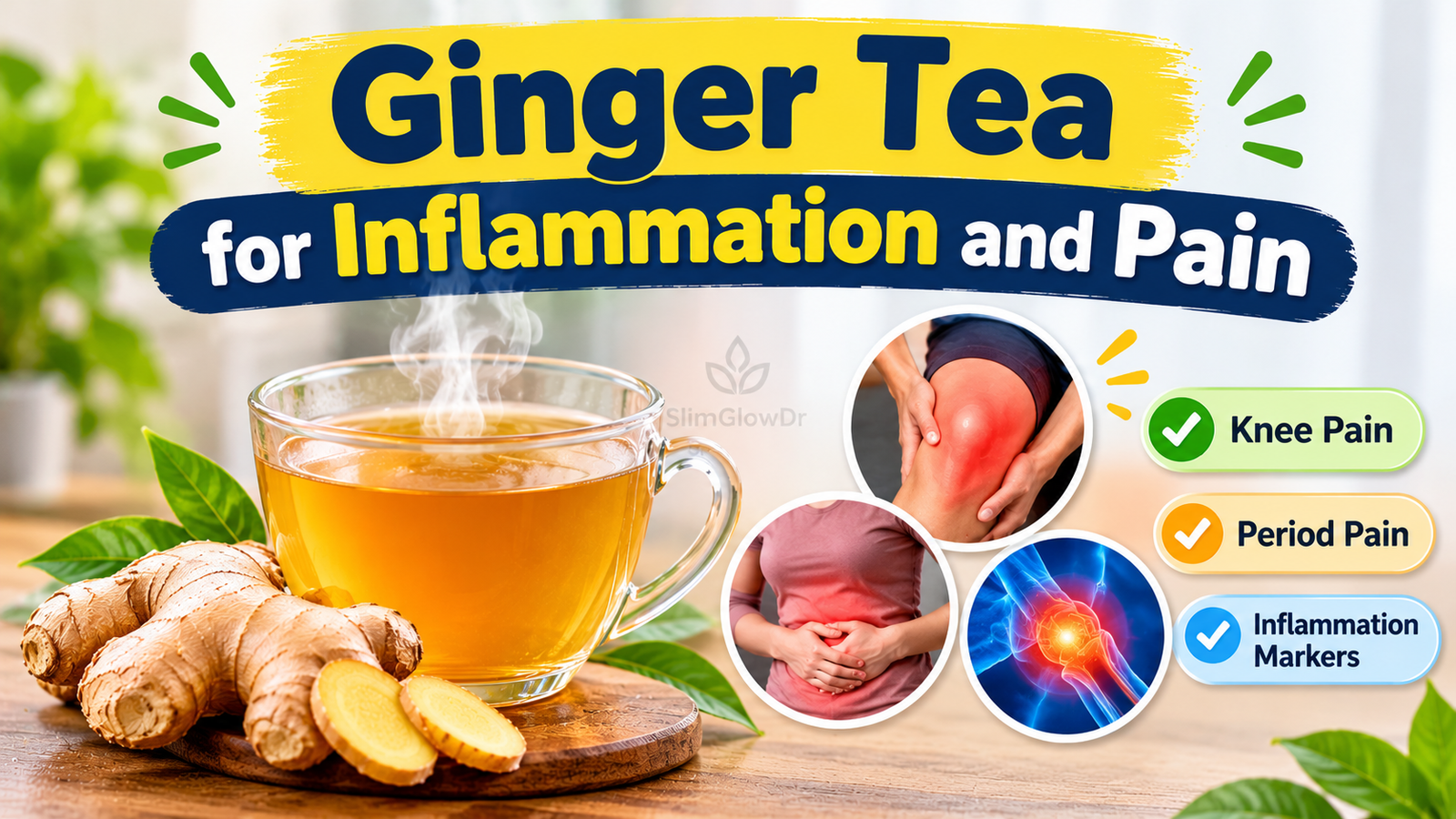
Evidence rating: varies by condition (see below). What was tested: supplements, extracts, and powder.
Ginger tea for inflammation is one of the most repeated claims, so it's worth separating the conditions:
- Knee osteoarthritis (Moderate, small effect): A meta-analysis of five osteoarthritis trials with 593 patients found ginger produced a statistically significant but modest reduction in pain and disability. The authors called it "modestly efficacious and reasonably safe," but people taking ginger were more than twice as likely to drop out, mostly because of stomach complaints. Studies of combination products (ginger plus turmeric, for example) don't count as evidence for ginger alone.
- Period pain (Limited): An analysis of period-pain trials found ginger powder reduced pain scores for primary dysmenorrhea (period pain without an underlying condition), using 750 to 2,000 mg a day during the first three to four days of the cycle. The authors described the evidence as "suggestive," and the 2022 umbrella review rated certainty for period pain as low. An independent review of six trials found a similar pain reduction with 750 to 2,000 mg of ginger powder a day and rated the evidence low certainty. If you want to try ginger tea for menstrual cramps, it's low-risk, but it hasn't been tested the way the powder was.
- Inflammatory markers (Limited): Some supplement trials report changes in blood markers such as C-reactive protein (CRP), but the 2022 umbrella review graded this evidence as low certainty. A shift in a lab marker also isn't the same as preventing an inflammation-related disease.
Blood sugar and cholesterol
Evidence rating: Limited to Moderate for HbA1c; Limited for fasting glucose and cholesterol. What was tested: supplements and powder, mostly in people with type 2 diabetes.
The research here conflicts, and we'll report the conflict rather than pick a side. One meta-analysis of diabetes trials, pooling 10 RCTs, reported improvements in HbA1c (a measure of average blood sugar over roughly three months) and fasting blood glucose. Another review found no clear effect on fasting blood sugar compared with control groups. The 2022 umbrella review rated HbA1c evidence as moderate and fasting glucose as low, and the Merck Manual describes the emerging evidence as showing a slight decrease in HbA1c.
Cholesterol results are weaker still. The umbrella review rated evidence for triglycerides, LDL, HDL, and total cholesterol as very low certainty.
For your mug, the takeaway runs in the opposite direction from the hype. If ginger does nudge blood sugar down even slightly, that matters most for people already taking glucose-lowering medication. We cover that interaction in the side-effects section below.
Claims with weak or no human evidence
You'll find claims that ginger tea fights cancer, protects the brain, "detoxes" the body, or kills bacteria. As far as we found, these rest on lab-dish or animal studies, or on no research at all. None of them has good evidence in people, and NCCIH's summary of ginger doesn't list any of them. Enjoy the tea for what it is: a warm, caffeine-free, near-zero-calorie drink.
Ginger Tea and Weight Loss: An Honest Look
Here's the straight version on ginger tea and weight loss. What was tested: supplements and powder. No trial we found tested ginger tea for weight.
A meta-analysis of 14 weight-loss trials in 473 adults with overweight or obesity found ginger supplementation reduced body weight, but the result was only borderline statistically significant, and BMI didn't change significantly. A larger 2024 dose-response meta-analysis of 27 trials, published in Nutrition Reviews, found an average loss of about 1.5 kg (roughly 3 pounds) compared with control groups. The effect showed up mainly at around 2 grams a day taken for longer than eight weeks, and the authors rated the certainty of the evidence as low.
Not every review agrees. A 2022 review in Current Pharmaceutical Design found no significant effect on body weight in the small number of trials that measured it, though it did report a small drop in BMI. Put together, any effect from supplements appears small and uncertain.
Researchers have proposed ways ginger might help, such as slightly raising heat production in the body (thermogenesis) or increasing fullness (satiety). These remain hypotheses rather than established effects in people. If "ginger boosts metabolism" is what drew you here, our guide on what actually supports a healthy metabolism covers the habits with more behind them, such as sleep, protein, and movement.
Ginger tea's realistic role in weight loss is simpler. Unsweetened, it's a warm, flavorful drink with next to no calories, which makes it a useful swap for sweetened coffee drinks, juice, or soda, especially in the afternoon or evening if that's when you usually reach for something sweet. Adding honey or sugar changes that math quickly, so taste it plain first.
Be skeptical of "ginger slimming" teas, drops, and shots sold with fat-burning or belly-melting promises. Nothing in the research supports those claims, and concentrated products can deliver far more ginger than a home-brewed cup. For a broader, evidence-graded look at these products, see what the evidence says about herbs and teas for weight loss.
Fat loss still comes down to a sustained calorie deficit. How large a deficit is realistic, and how fast the weight comes off, varies from person to person and tends to slow over time, so personalized guidance beats a fixed calorie number. If you'd like help structuring that without guesswork, our free 14-day whole-food meal plan includes simple lessons on calorie balance, and a plain mug of ginger tea fits into it easily.
Drinking Ginger Tea Every Day: How Much Is Safe?

For most healthy adults, drinking ginger tea every day is ordinary food use. The confusion starts when people try to turn study doses into cups, or quote limits without knowing where they came from.
How much ginger is in a cup of ginger tea?
There is no standard figure for how much ginger, or how many gingerols, a typical cup delivers, and we couldn't find a reliable published one. The answer shifts with how much root you use, whether it's fresh or dried, how finely you slice or grate it, and how long and how hot you brew it. Lab analyses show wide variation across commercial teas and beverages, and even across supplements with printed doses.
That's why the tea column in the table above says "Not established." We also don't repeat the cups-to-grams conversions some websites quote, because we couldn't trace them to a primary source. If you brew at home, think in terms of how much root you use (see the recipe below) rather than treating a mug as a clinical dose.
For context, the UK Committee on Toxicity estimated that women aged 16 to 49 in the UK eat about 0.55 grams of ginger a day on average from their normal diet. Concentrated ginger "shots" are a different matter: the committee noted that some contain up to about 30 grams of fresh ginger per serving.
Why you see "4 cups", "4 g", and "5 g" limits
| Number you'll see online | Where it seems comes from | What it actually means |
|---|---|---|
| "4 g a day" | Repeated widely in consumer herb guides; we couldn't trace an official origin | Not an official limit. The FDA lists ginger as generally recognized as safe (GRAS) for use as a spice, with no daily maximum. |
| "1 g a day in pregnancy" | The dose used in many pregnancy trials, repeated in some herb references | A trial convention, not a proven safe ceiling. Finland's food authority says a safe pregnancy limit can't be set. |
| "5 g a day" | No authoritative source | Not a recommendation from any health body we could identify |
| "4 cups a day" | Appears to come from an unsourced cups-to-grams conversion | Not a limit; cup strength varies too much for this to mean anything precise |
[VISUAL PLACEHOLDER: Table listing common online ginger limits (4 g, 1 g in pregnancy, 5 g, 4 cups), where each figure originates, and what it really means; Alt text: Table explaining where common ginger daily limits come from and what they mean]
The most important correction is the FDA one. Ginger appears on the FDA's GRAS list of spices and natural seasonings, which recognizes it as safe for its intended use as a flavoring. That regulation sets no quantity limit, and GRAS status for a spice isn't a safety rating for supplement-sized doses either. No regulator we found has set an official upper limit for ginger.
As general guidance (our editorial judgment, not an official or tested limit), a few mugs of home-brewed ginger tea a day, made as in the recipe below, falls within normal food use for most healthy adults. Stronger brews and larger amounts make heartburn and stomach upset more likely, so ease off if you notice either. If you're in one of the caution groups below, ask your clinician what makes sense for you rather than relying on any number online.
Ginger tea before bed
Ginger tea before bed won't keep you awake the way black or green tea can, because pure ginger tea is naturally caffeine-free. Check blends, though, since some ginger teas include black or green tea. That's about where the sleep story ends, though: we found no study showing ginger tea improves sleep.
The catch is heartburn, a known ginger side effect. No research has tested the best time to drink ginger tea, but if you're prone to reflux, it makes sense not to lie down right after a strong cup. One option is to have your evening cup an hour or two before bed and keep it on the weaker side, or to save ginger tea for earlier in the day. Other timings depend on why you drink it: before a meal if you're using it for queasiness, or mid-afternoon as a swap for a sweet drink.
Ginger Tea Side Effects and Drug Interactions
Ginger tea side effects are usually mild, but "natural" doesn't mean free of interactions. This section deserves the same attention as the benefits.
Common side effects
According to NCCIH, ginger taken by mouth can cause:
- Abdominal discomfort or stomach upset
- Heartburn
- Diarrhea
- Irritation of the mouth and throat
The Merck Manual adds that some people feel a burning sensation when they eat ginger, and that nausea, indigestion, and changes in taste are possible. The 2022 umbrella review describes the side effects reported across studies as mild and advises caution for people prone to reflux.
Most of these effects were reported in supplement trials, so how they translate to tea is unknown, and a strong brew can still cause heartburn; the dose that triggers them varies from person to person. If ginger tea gives you heartburn, brew it weaker, drink it with food, or stop. For stomach symptoms, that reaction tells you more than any general limit can. Medication interactions are different, because you may not feel them, which is why the next section matters.
Medication interactions to know about
Ginger can interact with some medicines. The evidence is often mixed or theoretical, but the potential consequences are serious enough to take seriously.
Blood thinners and anti-inflammatory painkillers. Memorial Sloan Kettering's herb database warns that ginger used alongside anticoagulants such as warfarin may increase bleeding risk, and flags NSAIDs like ibuprofen as a similar concern.
The research is genuinely mixed. The UK Committee on Toxicity's 2025 review found that some trials showed effects on platelets at high doses while others showed none, and one study found no effect on warfarin's blood-clotting measure (INR). Yet case reports describe older adults on blood thinners whose INR rose sharply after taking ginger products, in one case from 2.7 to 8 after a ginger supplement, falling back once it was stopped. The committee concluded the clinical significance is undetermined. If you take any blood thinner, talk to your pharmacist before using ginger supplements or drinking strong ginger tea regularly.
Pharmacist’s Note: Report signs of unusual bruising, nosebleeds, bleeding gums, blood in the urine or stools, or prolonged bleeding immediately. If the patient starts or stops regular ginger use, significantly changes their intake, or develops bleeding symptoms, I would recommend contacting the anticoagulation clinic or prescriber to assess the need for an earlier INR check and further monitoring.
Diabetes medications. Memorial Sloan Kettering notes that ginger may add to the blood-sugar-lowering effect of diabetes drugs, though how much this matters clinically isn't known. Watch for signs of low blood sugar, which the NIH's diabetes institute lists as including feeling shaky, hungry, dizzy, or confused, and mention regular ginger use to your diabetes care team.
Blood pressure medications. Some studies suggest ginger may modestly lower blood pressure, although that evidence is weak, and we found no authoritative source confirming a meaningful interaction with blood pressure drugs. To be on the safe side, mention any ginger supplements or regular strong ginger tea to your doctor or pharmacist if you take blood pressure medication.
Other medicines. Memorial Sloan Kettering also lists possible interactions with the transplant drugs cyclosporine and tacrolimus. NCCIH's general advice applies: if you take any medicine, check with your healthcare provider before using ginger therapeutically.
Before surgery. Because of the possible bleeding risk, guidance on herbs before surgery from Cedars-Sinai says experts advise stopping herbal supplements two to three weeks beforehand, and Memorial Sloan Kettering advises stopping ginger supplements two weeks before. Tell your surgical team about any ginger you take, including tea, and follow their instructions.
Who should be cautious or check with a clinician first
Check with your doctor or pharmacist before drinking ginger tea regularly or taking ginger supplements if you:
- Take a blood thinner (anticoagulant or antiplatelet) or regularly take NSAIDs
- Have gallstones
- Have a bleeding disorder
- Have surgery coming up
- Are pregnant or breastfeeding
Be aware, and mention it to your pharmacist, if you: take diabetes medication, take blood pressure medication, or are prone to acid reflux or GERD.
[VISUAL PLACEHOLDER: Checklist callout box headed "Check with your doctor or pharmacist first if you..." listing the five caution groups above; Alt text: Checklist of people who should talk to a doctor before drinking ginger tea regularly]
A few of these deserve a word of explanation. Memorial Sloan Kettering advises people with gallstones to avoid ginger supplements because of possible effects on bile flow, and advises people with bleeding disorders to avoid them as well. Reflux matters because heartburn is a recognized ginger side effect, and reviewers advise caution for people prone to it. For breastfeeding, NCCIH says little is known about whether ginger is safe.
Ginger Tea During Pregnancy: What the Guidance Says
Ginger tea during pregnancy is where the guidance gets most nuanced, and where blanket statements in either direction aren't justified.
Where authorities accept ginger. NHS advice on pregnancy sickness suggests trying foods or drinks containing ginger, noting there's some evidence it may help reduce nausea and vomiting, and advises checking with a pharmacist before taking ginger supplements. NCCIH says ginger may help with pregnancy nausea, that ginger supplements in pregnancy "may be safe," and that you should consult your healthcare provider first. According to the UK Committee on Toxicity, NICE also recommends ginger as a non-drug option for mild-to-moderate pregnancy nausea.
Where caution comes in. The UK Committee on Toxicity reviewed ginger supplement safety in pregnancy in May 2025. It found no indication that ginger eaten as food causes harm to pregnant women or the fetus, and said culinary use isn't considered a health concern. For supplements, it concluded that the lack of safety data makes the risks hard to characterize, flagged a possible effect on platelets whose significance in pregnancy is undetermined, and noted that contamination of concentrated products can't be ruled out. Even so, it found no evidence to support changing current NHS advice.
Where authorities differ. Finland's food safety authority takes a stricter line. It requires ginger supplements, and ginger tea packs and similar drink powders, to carry the warning "Not recommended for pregnant women." It says excessive or prolonged use of ginger during pregnancy should be avoided and that it isn't scientifically possible to set a safe limit. The UK committee also reports that a 2019 Finnish recommendation extended similar advice to breastfeeding women and young children, and that Norway has warned against ginger supplements and shots in pregnancy.
What the trials can and can't tell us. The 12-trial pregnancy review found no significant increase in heartburn, drowsiness, or miscarriage with ginger, but those safety comparisons were too small and imprecise to prove safety. Most of the trials also used capsules, not tea.
What this means for you. Food-level ginger appears widely accepted by major health bodies, safety data are limited (especially for supplements and concentrated products), and authorities don't fully agree. Our read: ginger as food or tea in ordinary amounts is accepted by the NHS and the UK Committee on Toxicity, Finland takes a stricter line, and supplements and shots are the real open question. Talk to your midwife, OB-GYN, or GP before using ginger regularly for morning sickness, and especially before taking supplements or ginger shots.
Severe vomiting needs prompt medical care. The NHS advises contacting your midwife, GP, or NHS 111 if you can't keep food or fluids down for 24 hours. This can be a sign of hyperemesis gravidarum, a serious form of pregnancy sickness that may need specialist treatment, sometimes in hospital. In the US, call your OB-GYN or midwife.
How to Make Ginger Tea
Learning how to make ginger tea takes about 10 minutes. The amounts below are a typical home recipe for flavor, not a clinical dose.
Fresh-root method
- Wash a thumb-sized piece of fresh ginger root. Peeling is optional.
- Slice it thinly or grate it. Grating releases more flavor and makes a stronger cup.
- Add it to about 1 to 2 cups of water and bring to a gentle simmer.
- Simmer or steep for 5 to 10 minutes, depending on how strong you like it.
- Strain into a mug.
- Taste before adding anything. A squeeze of lemon, a few mint leaves, or a cinnamon stick adds flavor without sugar.
Tea-bag method: Steep one ginger tea bag in just-boiled water for about 5 minutes, or as the package directs. Check the ingredients list: some "ginger" teas are mostly other herbs or flavorings, and MedlinePlus, in its morning-sickness advice, suggests making sure ginger products contain real ginger.
Ground ginger method: Stir a small pinch of ground ginger into hot water, let it settle for a minute, and sip. It's more convenient, but the texture can be gritty.
Two tips. First, a stronger brew means more ginger, and more ginger makes heartburn more likely if you're sensitive, so start mild and adjust. Second, if you drink ginger tea partly to cut back on sugary drinks, keep honey and sugar to a small amount or skip them; sweeteners add calories quickly.
[VISUAL PLACEHOLDER: Photo of thinly sliced fresh ginger root steeping in a mug of hot water with a lemon wedge, no sweeteners in frame; Alt text: Fresh sliced ginger root steeping in a mug of hot water with a lemon wedge to make ginger tea]
The Bottom Line
So, is ginger tea good for you? The research on ginger tea benefits and side effects points to a pleasant, low-risk drink rather than a remedy. Ginger has its best evidence for nausea, particularly in pregnancy, and smaller or less certain effects on digestion, period pain, blood sugar, and inflammation. Nearly all of that evidence comes from capsules and powder, and nobody knows exactly how much ginger a cup of tea delivers.
For weight loss, ginger tea won't do the heavy lifting. Its value is as a near-calorie-free swap for sweet drinks while a calorie deficit does the real work. Side effects are usually mild, but if you take blood thinners, have a bleeding disorder or gallstones, have surgery planned, or are pregnant, talk to your clinician before making it a daily habit, and mention it to your pharmacist if you take diabetes or blood pressure medication.
Want a plan for the part that actually works? If weight loss is your goal, download Slim Glow Dr's free 14-day meal plan. It's built around whole foods and simple lessons on calorie balance, so you know what to eat each day, and your ginger tea fits right in.
Frequently Asked Questions
Is it OK to drink ginger tea every day?
Yes, for most healthy adults, drinking home-brewed ginger tea daily counts as normal food use. Check with a clinician first if you take blood thinners or.regular NSAIDs, have gallstones or a bleeding disorder, have surgery coming up, or are pregnant or breastfeeding, and mention regular ginger to your pharmacist if you take diabetes or blood pressure medication. Day to day, watch for heartburn or stomach upset, and ease off if either appears.
How many cups of ginger tea a day is safe?
No official limit exists for cups of ginger tea, because the amount of ginger per cup depends on how much root you use and how long you brew it, and no one has established a standard cup. The often-quoted "4 cups" and "4 grams" figures aren't regulatory limits; the limits table above shows where each one comes from. As general guidance (our editorial judgment, not an official or tested limit), a few mugs of home-brewed tea a day is reasonable for most healthy adults.
Does ginger tea help you lose belly fat?
There's no evidence that ginger tea targets belly fat. Supplement trials show, at most, a small and uncertain effect on overall body weight, and we found no trial that tested ginger tea for weight loss. Unsweetened ginger tea can help indirectly by replacing sugary drinks, but losing fat, including around the waist, depends on a sustained calorie deficit.
Can ginger tea cause acid reflux or heartburn?
Yes. Heartburn is a recognized side effect of ginger, and reviewers advise caution for people prone to reflux. People with acid reflux or GERD are more likely to notice it, especially with strong brews or when lying down soon after drinking. A weaker cup, drunk with food and well before bed, may be better tolerated.
Does ginger tea lower blood sugar?
Not in any way that's been shown for tea. Some supplement trials in people with type 2 diabetes found a slight drop in HbA1c, while others found no clear effect on fasting blood sugar. If you take diabetes medication, ginger may add to its glucose-lowering effect, so let your care team know if you use ginger regularly.
Is fresh ginger tea better than ginger tea bags?
Neither has been shown to be healthier. Fresh ginger is richer in gingerols, while drying converts some of them into shogaols, but studies haven't shown that either form works better in people. Fresh root lets you control the strength. Tea bags are convenient; just check the ingredients to make sure they contain real ginger rather than mainly flavoring.
Who should avoid ginger tea or check with a doctor first?
Ask a doctor or pharmacist before drinking ginger tea regularly if you take blood thinners or regular NSAIDs, have gallstones or a bleeding disorder, have surgery coming up, or are pregnant or breastfeeding (guidance differs between health authorities). Be aware, and mention it to your pharmacist, if you take diabetes or blood pressure medication or are prone to acid reflux.
Is ginger tea safe during pregnancy?
Health authorities don't give a single answer. The NHS suggests trying foods or drinks containing ginger for morning sickness, while Finland's food authority requires packaged ginger teas to carry a "not recommended for pregnant women" warning. Talk to your midwife, OB-GYN, or GP before using ginger regularly, and get medical help quickly if you can't keep food or fluids down.