

This article contains an affiliate link. If you buy through it, Slim Glow Dr may earn a commission at no extra cost to you, consistent with FTC disclosure guidelines. You can read more about how we handle affiliate relationships in our affiliate disclosure policy.
If you've come across The Home Doctor - Practical Guide in an ad or a prepper forum thread and you're trying to figure out whether it's actually worth your money before you click “buy,” you're in the right place. This Home Doctor book review covers what's actually inside the guide, who wrote it, current pricing and refund terms, and the real limitations that some other reviews gloss over, including the graphic imagery some readers report and exactly what “doctor-informed” does and doesn't mean here. We also dug into the book's origin story, which traces back to documented shortages during Venezuela's healthcare crisis; that sourcing is covered in detail below, and it's a big part of why we think the premise holds up even where the author credentials don't fully check out.
Quick Answer
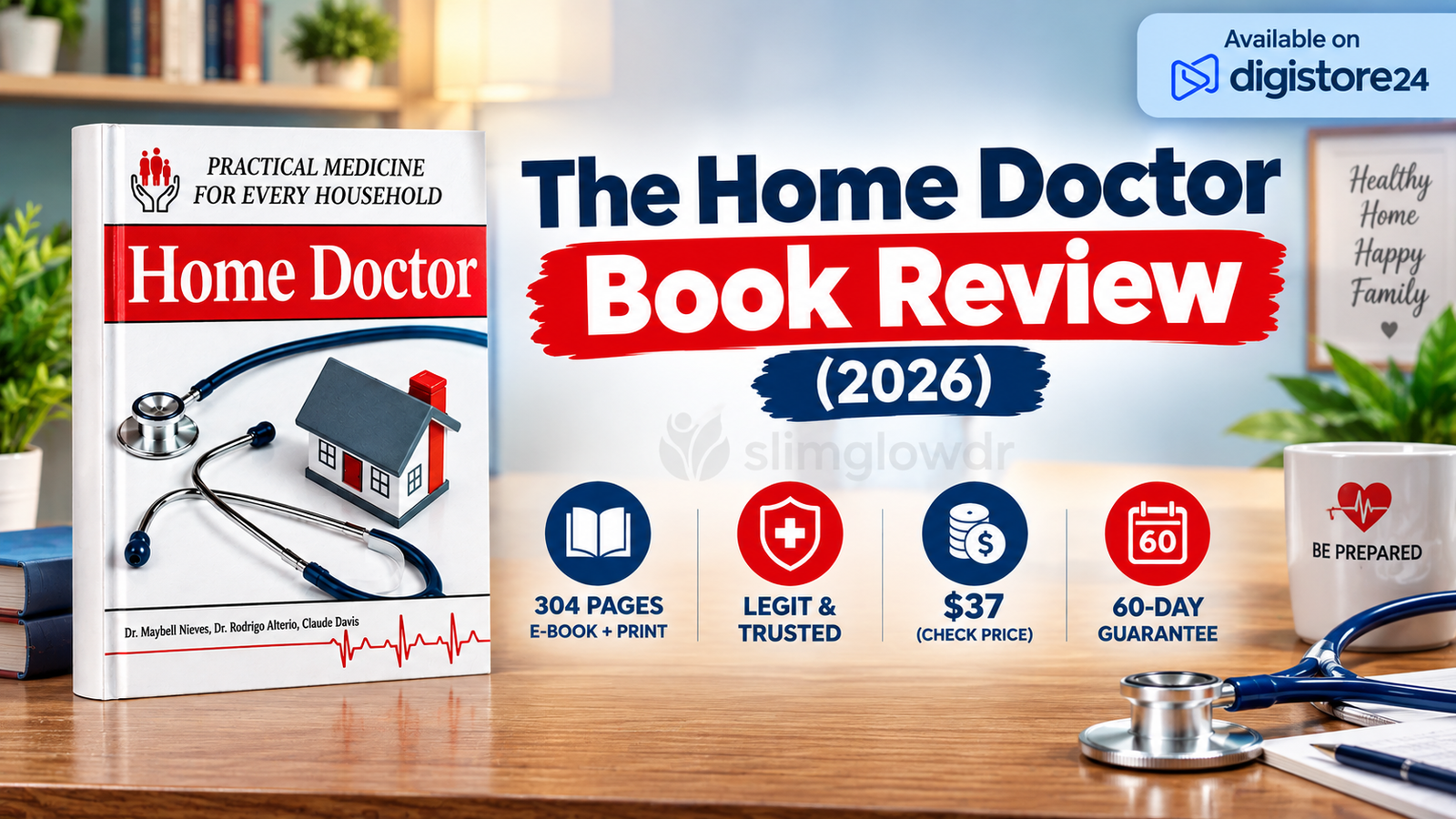
The Home Doctor - Practical Guide is a legitimate, 304-page home and survival medicine e-book (with a print option) written with input from two credentialed physicians and a survivalist author. It's a sensible fit for preparedness-minded households who want a home medical reference for situations when professional care isn't immediately available, and a poor fit for anyone looking for a substitute for a doctor or emergency room. It's priced at $37 as of this writing; confirm at checkout, since digital-product pricing can shift, sold through the Digistore24 platform, and backed by a 60-day money-back guarantee. It does not replace professional or emergency medical care.
Get The Home Doctor - Practical Guide and see today's price and the 60-day guarantee on the official product page.
What Is The Home Doctor - Practical Guide?
The Home Doctor - Practical Guide is a home medical reference built around a simple premise: most households have little to no plan for handling injuries, infections, or chronic conditions if a hospital, pharmacy, or doctor isn't reachable. The book organizes practical medical guidance head-to-toe, by condition and body system, so a reader can look up a symptom or situation the way they'd look up a term in a reference manual rather than reading it cover to cover.
It's marketed as a “doctor-informed” guide, meaning credentialed physicians are credited as contributors to the medical content, while a non-medical co-author handles the survivalist and practical-preparedness framing. That distinction matters, and here's exactly what each contributor brings to the table and what we could and couldn't confirm about them.
Who Wrote It: Claude Davis, Dr. Maybell Nieves, and Dr. Rodrigo Alterio
Three names appear on The Home Doctor - Practical Guide, and they play different roles.
Claude Davis is credited as the lead author and is described consistently across independent sources as a longtime prepper and survivalist writer, not a medical professional. He's previously written other survival-topic books, including “The Lost Ways” and “The Lost Book of Herbal Remedies.” His role here appears to be structuring the practical, self-reliance framing of the book rather than authoring its clinical content.
Dr. Maybell Nieves is presented on the publisher's own sales page as head surgeon of the Unit of Breast Pathology and a general surgeon at Caracas University Hospital in Venezuela, with more than a decade of experience, and as having studied at the European Institute of Oncology in Milan.
Dr. Rodrigo Alterio is described, also via the publisher's own bio page, as having practiced at three hospitals in Caracas, served as primary care physician for a Pemón (Kamarata) indigenous community in the Venezuelan Amazon starting in 2017, and participated in a volunteer paramedic group during civil unrest in Caracas. The bio also states he currently works as a postdoctoral research associate in surgical oncology at a U.S. academic medical center. The bio page doesn't list a named medical school or board-certification number for either doctor.
The one caveat that matters most in this whole review, stated plainly and only once: both physician bios are publisher-stated. We were not able to independently confirm either against a hospital staff directory or a licensing board. That doesn't mean the credentials are false. It means “doctor-informed” should be read as a claim made by the people selling the book, not as a fact verified by an outside authority. We'll refer back to this single point rather than re-litigate it in every section below.
The practical takeaway: the book is credited to two people presented as physicians and one experienced survival-content author; credentials as-claimed, not as-verified.
The Origin Story: Lessons From Venezuela's Healthcare Crisis
The book's backstory ties directly to Venezuela's healthcare collapse in the mid-to-late 2010s, and that context is well documented independently of the publisher. Reporting from that period, in]cluding analysis published in The Lancet and reporting by NPR, described an estimated 85% shortage of medicines according to the Pharmaceutical Federation of Venezuela, with other sources citing a roughly 70% shortage of medicines and a 74% shortage of surgical supplies via the Venezuelan NGO Red de Médicos por la Salud. Around 14% of the country's ICUs were reported non-operational, and more than 13,000 doctors were reported to have left the country over a four-year span.
Those figures describe conditions in Venezuela specifically during 2016 to 2018, not the country's current situation, and they don't prove the book's medical content is clinically validated. What they do establish is that the crisis conditions the book claims to draw from were real and severe, which makes the origin story plausible rather than a purely marketing-invented backstory.
What's Inside The Home Doctor Book (Table of Contents Overview)
The Home Doctor book is a 304-page guide organized as a practical reference rather than a narrative read. The table below gives a general sense of how the content is grouped, delivered as a PDF you can read on a phone, tablet, or computer alongside the printed edition.
| Section | What It Covers |
| First Aid and Emergency Procedures | Cuts, wounds, burns, fractures, sprains, and recognizing when a situation needs emergency transport rather than home care |
| Infections, Medication Guidance, and Chronic Condition Management | Recognizing common infections, over-the-counter and prescription medication basics, and managing chronic conditions like diabetes or hypertension when regular medical access is disrupted |
| Herbal and Natural Remedies | Herbal and natural remedy options positioned as a supplement to conventional care, not a replacement for it |
First Aid and Emergency Procedures
This section covers the kind of situations that come up in any household eventually: cuts and wounds, burns, fractures and sprains, and how to recognize when a situation is serious enough that it needs emergency transport rather than home care. This is the same territory covered by standard first-aid training, but framed for a reader who may not have access to a pharmacy or clinic in the near term. That look-up-by-symptom structure matters most under pressure: FEMA's own emergency preparedness guidance stresses having reference materials organized for fast, in-the-moment use rather than material meant to be studied end-to-end, since decision-making narrows in an actual crisis.
Infections, Medication Guidance, and Chronic Condition Management
This portion focuses on recognizing common infections, understanding over-the-counter and prescription medication basics, and managing chronic conditions like diabetes or hypertension when regular medical access is disrupted. This is also the section where the limits of “doctor-informed but not independently peer-reviewed” content matter most: medication guidance is an area where getting details wrong has real consequences, which is exactly why the disclaimer later in this review isn't a formality. Medication-supply disruption is also a documented feature of the kind of prolonged crisis conditions the book's origin story describes the same Venezuela reporting cited above found medicine shortages affecting the large majority of pharmacies, which is the specific scenario chronic-condition guidance in a book like this is meant to address, not everyday use in place of a functioning healthcare system.
Herbal and Natural Remedies Covered in the Guide
The guide includes herbal and natural remedy content, positioned as a supplement to conventional care rather than a replacement for it in situations where over-the-counter or prescription options aren't reasonable substitutes. If home and natural remedies are an area you're already building out, our natural remedies coverage has more on evidence-based approaches to common health concerns.
Is The Home Doctor Book Legit, or a Scam?
Based on what we could verify, The Home Doctor Practical Guide is a legitimate product: it's sold through an established third-party digital commerce platform, it has a documented refund policy, the physical book is a real, shippable product, and its authorship is consistent across the publisher's own materials and multiple independent third-party reviews. “Legit” here means it's a real product doing what it says on the label, not a claim that every medical detail inside has been independently peer-reviewed.
What the Authors' Credentials Do (and Don't) Confirm
As covered above: the physician credentials are publisher-stated and echoed in similar wording across several third-party review sites, but this review did not check them against an external hospital directory or medical licensing board. That confirms the book has physician input as claimed by the people selling it. It doesn't confirm formal peer review, clinical trial validation, or a specific licensing-board record.
What Other Reviews Get Right, and What They Leave Out
Most existing Home Doctor reviews accurately cover the basics: who wrote it, roughly what's inside, and that it's sold as a digital-and-physical bundle. Where a lot of them fall short is in three areas: they rarely disclose that author credentials are self-reported rather than independently verified, they often skip the graphic medical imagery some readers report finding inside, and several third-party “reviews” circulating online are themselves marketing-adjacent content (syndicated press releases or mirror sites promoting the same product) rather than independent evaluations. That's worth knowing when you're trying to judge how much weight to put on glowing reviews you find elsewhere.
How Much Does The Home Doctor Book Cost? (Pricing and Refund Policy)
At a glance:
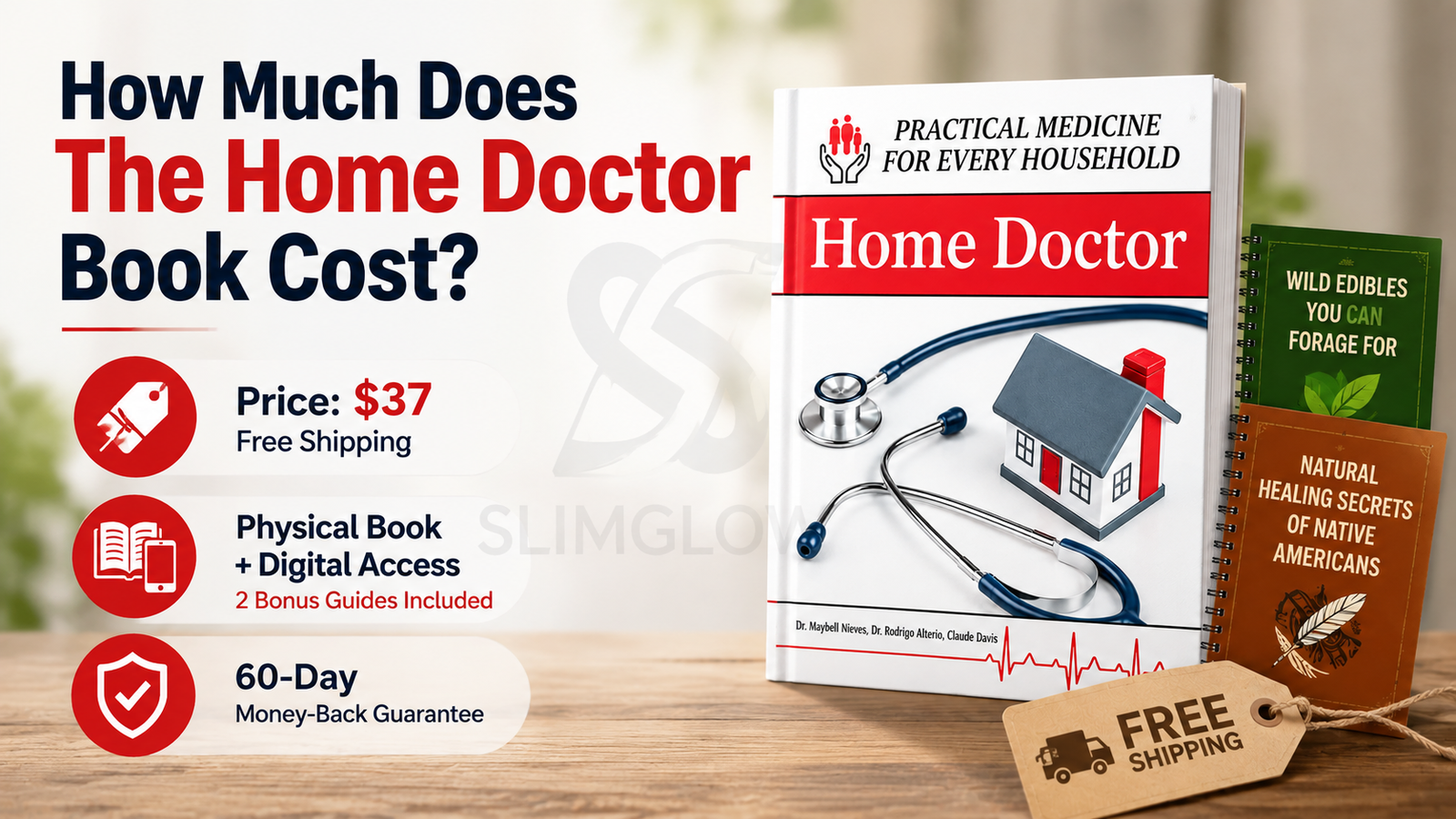
- Price: $37 for the physical edition, which includes digital access, with free shipping shown on the order form (current at time of publication; confirm at checkout since digital-product pricing can shift)
- Format: Physical book plus digital access, with two included bonus guides
- Refund window: 60-day money-back guarantee, processed through Digistore24
Digital PDF vs. Physical Copy
The core offer bundles both formats: you get digital access as a downloadable PDF (useful if you want the content on a phone or tablet, or as a backup) along with a printed, shippable copy (useful for a genuine emergency-prep kit, since a printed book doesn't depend on a charged device or internet access). The publisher also includes two digital bonus guides, “Wild Edibles You Can Forage For” and “Natural Healing Secrets of Native Americans,” with the purchase. For a preparedness-focused buyer, having both a physical and digital copy is meaningfully more useful than either format alone; a printed reference is the one that still works when the power is out.
The Money-Back Guarantee, Explained
The book is sold through Digistore24, a third-party digital commerce and payment processing platform, not ClickBank (an earlier, incorrect assumption some sources make about this product). Digistore24 handles the checkout and administers the refund process on the vendor's behalf.
The publisher states a full 60-day money-back guarantee, refundable via a request to the vendor, along with a separate claim that if the book doesn't help you “save at least $37,” they'll issue a refund. Both are the seller's stated policy, not outcomes independently verified by this review. You can review how digital-product refund windows like this typically work through Digistore24's own help center before buying, so you know the mechanics if you ever need to request one.
Check today's price and 60-day guarantee directly on the product page before deciding.
Pros and Cons of The Home Doctor - Practical Guide
| Pros | Cons |
| Organized as a practical, look-up-by-condition reference rather than a dense textbook | Author medical credentials are publisher-stated, not independently verified |
| Covers first aid, infections, chronic condition management, and herbal remedies in one guide | Some readers/reviewers report graphic medical photographs that can be uncomfortable |
| Includes both physical and digital formats plus two bonus guides | Not peer-reviewed or clinically validated as a medical text |
| Backed by a 60-day money-back guarantee via Digistore24 | Price and offer terms can shift on digital sales funnels; confirm at checkout |
| Fills a real preparedness gap given how few households have formal first-aid training | Cannot replace professional diagnosis or emergency care |
What Stood Out as Genuinely Useful
The head-to-toe, by condition organization is a real strength for the book's stated use case: in an actual emergency or access disruption, you want to find “wound care” or “fever management” quickly, not read chapters in sequence. Combining first aid, medication basics, chronic disease management, and herbal remedies in a single reference also matches how preparedness-minded households actually think about “what if help isn't available,” rather than treating those as separate concerns.
Real Limitations to Know Before Buying (Including the Graphic-Imagery Concern)
Several independent readers and reviewers have noted that the book includes graphic medical photographs. For example, images depicting the progression of certain conditions, intended to help readers accurately identify how serious a situation is. Reactions to this are genuinely mixed: some readers say the graphic detail is necessary for accurate self-diagnosis, while others find the images more intense than expected for a book that might be sitting on a shelf where kids can flip through it. This is a recurring pattern across informal reader commentary, not a single reviewer's opinion, so it's worth knowing going in.
The other limitation worth naming plainly: this is a self-published reference with physician-credited input, not a peer-reviewed clinical text. That's not a reason to dismiss it. Plenty of useful preparedness resources aren't peer-reviewed. But it means treating it as a starting reference and judgment aid, not as authoritative medical instruction that overrides professional guidance.
The Home Doctor Book vs. Other First Aid and Preparedness Resources
| Resource | Format | Depth | Price Tier | Best For |
| The Home Doctor - Practical Guide | Physical + digital bundle | Broad, condition-by-condition, includes herbal remedies | Mid ($37 as of this review) | Households wanting one all-in-one home medical reference |
| Standard first-aid manuals/courses (e.g., Red Cross) | Physical or online course | Focused on core first aid/CPR skills, hands-on certification | Low to free | Building foundational, widely recognized first-aid skills and certification |
| The Survival Medicine Handbook (Alton & Alton) | Physical + digital | Deeper clinical detail aimed at extended/no-access scenarios, written by a physician and a nurse practitioner | Higher ($40–$60 range) | Readers who want more clinical depth than a general reference and are comfortable with a denser read |
Formal, standardized first-aid training resources remain the mainstream benchmark for a reason: they're taught, tested, and updated by an established training organization, and they build hands-on skill (like CPR technique) that a book alone can't fully teach. The Home Doctor book isn't trying to replace that kind of training. It's filling a different gap, a reference for situations and conditions that go beyond what a standard first-aid course covers, particularly around medication guidance, chronic disease management, and extended self-reliance scenarios. Where it sits relative to denser clinical references like the Survival Medicine Handbook comes down to how much depth you want versus how quickly you want to be able to look something up.
Who Should, and Shouldn't, Buy This Book?
This book is a reasonable fit if you're a preparedness-minded household that wants a single reference for home medical situations, you live somewhere with limited or delayed access to a hospital or pharmacy (rural or off-grid living, for example), or you already maintain an emergency kit and want to add a medical reference component to it. It's also a fair fit for readers who want herbal and natural remedy information organized alongside conventional first-aid guidance rather than scattered across separate sources.
It's a poor fit if you're looking for a substitute for regular medical care, a formal first-aid or CPR certification (which requires hands-on training, not just a book), or a guaranteed solution to a specific medical condition. As general context, not a claim about this book specifically: a nationally representative U.S. survey published in the Journal of the American Heart Association found that only 18% of adults were currently trained in CPR, and 65% had ever been trained. That gap is part of why home medical preparedness resources have broad appeal, but a book on a shelf doesn't close it by itself; hands-on training and general emergency preparedness guidance from established sources still matter alongside it.
If you're browsing this category generally, you can also find more of our honest product reviews on the site.
Important Medical Disclaimer
The Home Doctor - Practical Guide is a reference resource, not a substitute for professional medical diagnosis, treatment, or emergency services. If you or someone else is experiencing a medical emergency, call emergency services immediately rather than relying on any book, including this one. The physician credentials associated with this book are claims made by the publisher, and this review did not confirm them against a licensing board or hospital directory; treat the “doctor-informed” framing as accurate to what's publicly stated, not as a formal medical endorsement or peer-reviewed clinical validation. Always consult a licensed healthcare provider for diagnosis, medication decisions, and treatment of any medical condition.
Conclusion
So, is The Home Doctor book worth it? Based on this review: it's a legitimate, reasonably priced home medical reference with genuine strengths for preparedness-minded households, credited physician input that comes from the publisher rather than an outside authority, and real limitations worth knowing before you buy, including graphic imagery some readers find intense and the fact that it isn't peer-reviewed. At $37 with a 60-day money-back guarantee through Digistore24 (confirm current pricing at checkout), it's a reasonably low-risk way to add a home medical reference to a preparedness kit, provided you go in treating it as exactly that: a reference, not a replacement for a doctor or emergency care.
If that fits what you're looking for, you can get The Home Doctor - Practical Guide directly and review the current price and guarantee terms for yourself before buying.
Key Takeaways
- The Home Doctor Practical Guide is a 304-page, doctor-informed home and survival medicine reference, sold as a physical book with digital access included.
- Priced at $37 as of this review (confirm at checkout), sold via Digistore24, backed by a 60-day money-back guarantee.
- Best fit: preparedness-minded households wanting a single home medical reference; poor fit for anyone seeking a substitute for professional or emergency care.
- Author medical credentials come from the publisher's own materials and were not checked by this review against a licensing board or hospital directory.
- Most important caveat: this book does not replace professional medical diagnosis, treatment, or emergency services.
Frequently Asked Questions
Is The Home Doctor book legit or a scam?
Yes. It's a real, shippable physical book with digital access, sold through an established third-party payment platform (Digistore24) with a documented 60-day refund policy, and consistent authorship across the publisher's materials and independent reviews.
What is inside The Home Doctor - Practical Guide?
First aid and emergency procedures, infections and medication guidance, chronic condition management, and herbal and natural remedies 304 pages, organized head-to-toe by condition.
Who wrote The Home Doctor book?
Claude Davis, a survivalist author, alongside Dr. Maybell Nieves and Dr. Rodrigo Alterio, presented as physicians with clinical backgrounds in Venezuela. Their credentials are publisher-stated and weren't independently verified for this review.
How much does The Home Doctor book cost?
$37 as of this writing, including the physical book, digital access, and two bonus guides. Digital product pricing can shift, so confirm at checkout.
Is there a free PDF version of The Home Doctor book?
No verified free version exists. Buy only through the publisher's official site or Digistore24 checkout treat “free download” copies elsewhere with caution.
Does The Home Doctor book come with a refund guarantee?
Yes, a 60-day money-back guarantee through Digistore24, plus a separate publisher claim that they'll refund you if the book doesn't save you at least $37. Both are seller-stated terms.
Is The Home Doctor book medically accurate or doctor-approved?
It credits two contributors presented as physicians, but it isn't independently peer reviewed and the credentials aren't licensing-board verified. Read “doctor-informed” as accurate-to-claim, not formally endorsed.
Is this book a replacement for seeing an actual doctor?
No, it's a reference for when professional care isn't immediately available, not a substitute for diagnosis, treatment, or emergency services.
Is The Home Doctor book available in print, or digital only?
Both. The standard offer bundles a physical, shippable book with digital access in one purchase.
Who is The Home Doctor book meant for?
Preparedness-minded households, off-grid or rural residents, and anyone wanting a home medical reference for delayed or unavailable hospital/pharmacy access.