
By Dr. Kaneez Fatima, Pharm-D. Last updated: November, 2026
This article contains no affiliate links or sponsored content. It's for general education and isn't a substitute for a diagnosis from your doctor or dermatologist.
You file one nail smoothly, and the next one splits down the side. Another peels into paper-thin layers at the tip, and the one you were finally growing out snaps while you're opening a can. Brittle, peeling nails are common, and they're frustrating precisely because they seem to get worse no matter what you buy.
If you're trying to figure out how to strengthen nails naturally, the most useful answer is also the least glamorous: most of the improvement comes from habits. Keeping water and harsh solvents off your nails, moisturizing them, and handling them gently tend to help most people more reliably than the supplements sold for nails, which have little evidence behind them for people who aren't deficient.
This guide rates each popular remedy by the strength of the evidence behind it, so you can put your effort where it's most likely to pay off. One expectation to set now: nails grow slowly, so real change shows up over months, not days.
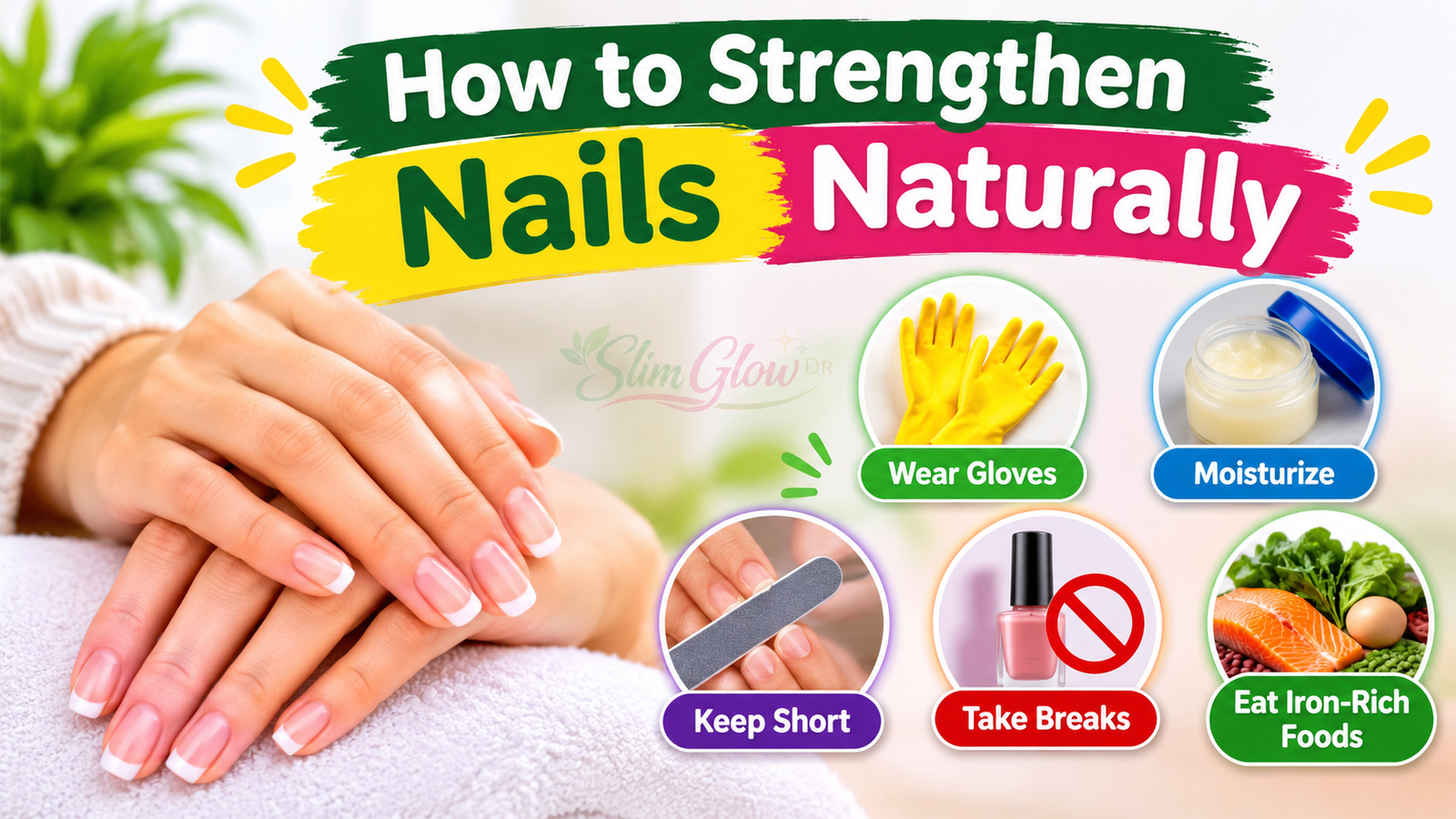
Quick answer: To strengthen nails naturally:
- Cut down on soaking and wear gloves for wet chores
- Moisturize nails and cuticles daily, and seal them with petroleum jelly at night
- Keep nails short and file gently
- Take breaks from gels and acetone
- Eat enough protein and iron-rich foods
Expect results over several months, and see a doctor if changes persist.
Strengthening Methods at a Glance: What the Evidence Says
Habits, supplements, and natural remedies for brittle nails are often listed side by side as if they were equally proven. They aren't. Every method in this guide carries one of five ratings:
- Strong: consistent advice from major dermatology and medical bodies, a clear mechanism, and low risk. Few clinical trials test nail-care habits, so "Strong" here reflects expert consensus rather than trial proof.
- Some: small controlled studies, or a benefit seen mainly when a deficiency or condition is present.
- Weak: only small, uncontrolled, or single-product studies, or no benefit shown in people who aren't deficient.
- No evidence: nothing in the research supports the claim, but nothing shows it causes harm either.
- Myth: a popular claim that the evidence contradicts, or that carries a possible downside.
Ratings were assigned by the author, Dr. Kaneez Fatima, Pharm-D, from the sources cited in each section of this guide.
| Method | Evidence rating | Best for | Notes |
|---|---|---|---|
| Less water exposure, gloves for wet work | Strong | Everyone, especially soft or peeling nails | Repeated wetting and drying is a key driver of brittle nails |
| Daily moisturizing, cuticle oil, hand cream | Strong | Dry, peeling nails | No single oil has been shown to work best |
| Sealing with petroleum jelly or lanolin at night | Strong | Dry-brittle nails | Cheap, low-risk occlusive step |
| Short nails, gentle filing | Strong | Nails that snag and split | Fewer edges to catch and tear |
| Polish and gel breaks, acetone-free remover | Strong | Anyone who wears polish or gels | Every removal method stresses the nail plate |
| Enough protein, food-first diet | Some | Low or restrictive diets | Helps most if your intake is actually low |
| Correcting a diagnosed deficiency | Some | People with confirmed low iron or other deficiencies | Needs testing, not guesswork |
| Prescription-type HPCH nail lacquer | Some | Persistent brittle nails | One small randomized trial, no placebo; ask a dermatologist |
| Formaldehyde nail hardeners | Weak | Short-term hardening | Can cause allergy or nail lifting in some people |
| Biotin (if not deficient) | Weak | Uncertain | Can interfere with lab tests |
| Collagen peptides | Weak | Uncertain | One small, uncontrolled study |
| Horsetail or silicon | Weak | Uncertain | No controlled oral horsetail trial for nails |
| Gelatin | Myth (unproven) | Not recommended | No good evidence it helps |
| Drinking extra water | Myth | Not recommended | Fine for general health, not a nail fix |
| Calcium (if not deficient) | Myth | Not recommended | Nails are mostly keratin, a protein |
| Lemon, garlic, or apple cider vinegar soaks | Myth | Not recommended | Can irritate skin; soaking adds wet-dry stress |
Why Nails Get Weak in the First Place
To understand how to strengthen brittle nails, it helps to know what a nail actually is. The hard part you see, the nail plate, is made mostly of keratin, a tough protein produced by the nail matrix under the skin at the base of your nail. The cuticle is a thin layer of skin cells that seals the gap between the nail and the skin fold behind it, according to Cleveland Clinic's overview of nail anatomy.
The nail plate is built from layers of flattened cells held together by fats and proteins. When your hands get wet and then dry again, over and over, those layers swell and shrink, and tiny fractures form between the cells. A review of brittle nail syndrome in Dermatology and Therapy describes this wet-dry cycling as a central cause, along with solvents that strip the fats holding cells together and the natural increase in fragility that comes with age. The same review estimates that brittle nails affect up to 20% of people, especially women over 50.
[VISUAL PLACEHOLDER: Labeled diagram of a fingernail showing the nail plate, nail matrix, cuticle, and nail bed, with an arrow indicating new nail forming at the matrix and growing toward the tip. Alt text: Diagram of fingernail anatomy showing the nail plate, matrix, cuticle and nail bed]
Dry-Brittle vs. Soft-Brittle Nails: Which Do You Have?
This isn't a formal medical classification, but it's a practical rule of thumb some dermatology sources use, including UPMC's guidance on brittle nails. The idea is simple: brittle nails tend to fail in one of two ways, and each points toward a slightly different fix.
| Dry-brittle nails | Soft-brittle nails | |
|---|---|---|
| How they feel | Hard and rigid | Bendy, thin, soft |
| How they fail | Peel in layers, crack, split | Bend, tear, fold over |
| Likely contributor | Too little moisture, solvents, cold, dry air indoors | Too much water exposure, frequent soaking |
| What to focus on | More moisturizing and overnight sealing | Less soaking, gloves for wet work, possibly a strengthening polish |
A rough self-check we use as a rule of thumb, not a clinical test: press gently on the free edge of a nail. If it barely gives and tends to flake at the tip, think dry. If it bends easily and tears rather than cracks, think soft. Plenty of people have a bit of both, and gloves help either way. If your nails are soft, focus on cutting back water exposure before adding more products.
Everyday Causes of Brittle, Peeling Nails
If you've been asking "why are my nails so weak?" or "why are my nails peeling?", the culprit is usually something you do every day rather than something wrong inside your body. According to the NHS overview of nail problems, most nail problems come from injury, biting, poor trimming, or frequent contact with water and cleaning products. Common triggers include:
- Frequent handwashing, dishwashing, and cleaning without gloves
- Acetone removers and other solvents that dry out the nail plate
- Gel, acrylic, and dip manicures, especially the removal step
- Using nails as tools to pry, scrape, or open things
- Biting or picking at nails and cuticles
- Aging, since nails can become more brittle over time
- Pregnancy, which can change nails temporarily (the NHS notes this should improve within about six months of giving birth)
How Long Does It Take to Strengthen Nails?
Longer than most people expect. In a small study of 22 healthy young adults, fingernails grew about 3.5 mm per month on average and toenails about 1.6 mm per month. Cleveland Clinic gives similar round numbers (about 3 mm and 1.5 mm) and notes that a full fingernail takes at least six months to grow out, while a toenail takes 12 to 18 months.
That study looked at healthy young people, so your own nails may grow more slowly. In practice, better habits protect the nail you already have right away, so you may notice less snagging and fewer breaks within a few weeks. The stronger nail, though, has to grow out from the matrix at the base. Give any new routine at least three months before you judge it, and closer to six for the full picture. Taking a photo of your nails today makes that comparison much easier than relying on memory.
Daily Habits That Strengthen Nails Naturally
These habits are cheap, low-risk, and recommended consistently by groups such as the American Academy of Dermatology (AAD), Mayo Clinic, and Cleveland Clinic.
Cut Down on Water Exposure and Wear Gloves
Evidence: Strong. Cutting back on water exposure is the single most useful change for many people. Dermatologists recommend wearing gloves when washing dishes or cleaning, and moisturizing after you wash your hands.
How to do it:
- Keep a pair of waterproof gloves at each sink you use often. Gloves you have to go looking for don't get worn.
- For long wet jobs, the brittle-nails review suggests cotton gloves under vinyl ones, which keeps sweat from soaking your nails inside the glove.
- Skip long soaks during manicures, and keep baths and dishwashing sessions shorter where you can.
Watch for one easy miss: wearing gloves for dishes but not for wiping counters with cleaning spray. Detergents and cleaning products count too.
Moisturize Nails and Cuticles Every Day (Cuticle Oil and Hand Cream)
Evidence: Strong. When you apply hand cream, work it into your nails and cuticles as well, a step Mayo Clinic's nail care do's and don'ts specifically calls out. Do it after every handwash if you can, and at least morning and night.
What about the best oil for nails? Jojoba, olive, almond, and coconut oils are all popular, but no head-to-head study has shown that one strengthens nails better than another. Consistency matters far more than which bottle you buy, so use whichever one you like enough to apply daily. Cuticle oil for nail growth is a similar story: it keeps the surrounding skin healthy, which supports good nail care, but there's no evidence it makes nails grow faster.
Cleveland Clinic dermatologist Rosemary Keskinen, MD, also suggests lanolin-containing nail conditioners and avoiding conditioners that contain alcohol, which can be drying.
Seal In Moisture Overnight (Petroleum Jelly, or "Nail Slugging")
Evidence: Strong. Moisturizers work better when an occlusive layer on top slows water loss. The brittle-nails review lists petrolatum (petroleum jelly) and lanolin as occlusive ingredients for this purpose, and Cleveland Clinic describes "nail slugging": coating your hands and nails in petroleum jelly at bedtime.
A practical routine: apply your usual cream or oil, let it sink in for a minute, then rub a thin layer of petroleum jelly over each nail and cuticle. Some people slip on light cotton gloves to keep it off the sheets. This step suits dry-brittle nails best (see the self-check above).
Keep Nails Short and File the Right Way
Evidence: Strong. Long nails act like levers, so every bump puts more force on the free edge. The AAD recommends cutting nails straight across, rounding the tips slightly, and using an emery board to keep edges smooth and free of snags.
As a general rule of thumb, file in one direction rather than sawing back and forth, and choose a fine-grit or glass file over a coarse one. A slightly rounded or squoval shape tends to catch less than sharp corners. Trim after a shower or after moisturizing, when nails are more flexible and less likely to crack.
Go Easy on Polish, Removers and Nail Hardeners
Evidence: Strong for polish breaks and acetone-free remover; Weak for formaldehyde hardeners. Use nail polish remover no more than once a week and choose an acetone-free formula, Mayo Clinic advises, since acetone dries nails out.
Nail hardeners are where advice conflicts. Mayo Clinic says a hardener might help strengthen nails. Dermatology references, however, note that formaldehyde (sometimes listed as formalin or methylene glycol) in some strengthening products can trigger an allergic reaction and has been linked to painful nail lifting in some cases. If you try a hardener, check the label, and stop using it if you notice redness, itching, pain, or the nail separating from the skin underneath.
If your nails stay brittle despite good habits, it's worth asking a dermatologist about a hydroxypropyl chitosan (HPCH) nail lacquer. A small 2019 trial found improvement with this type of lacquer, though it had no placebo group.
Stop Using Nails as Tools (and Ways to Quit Biting)
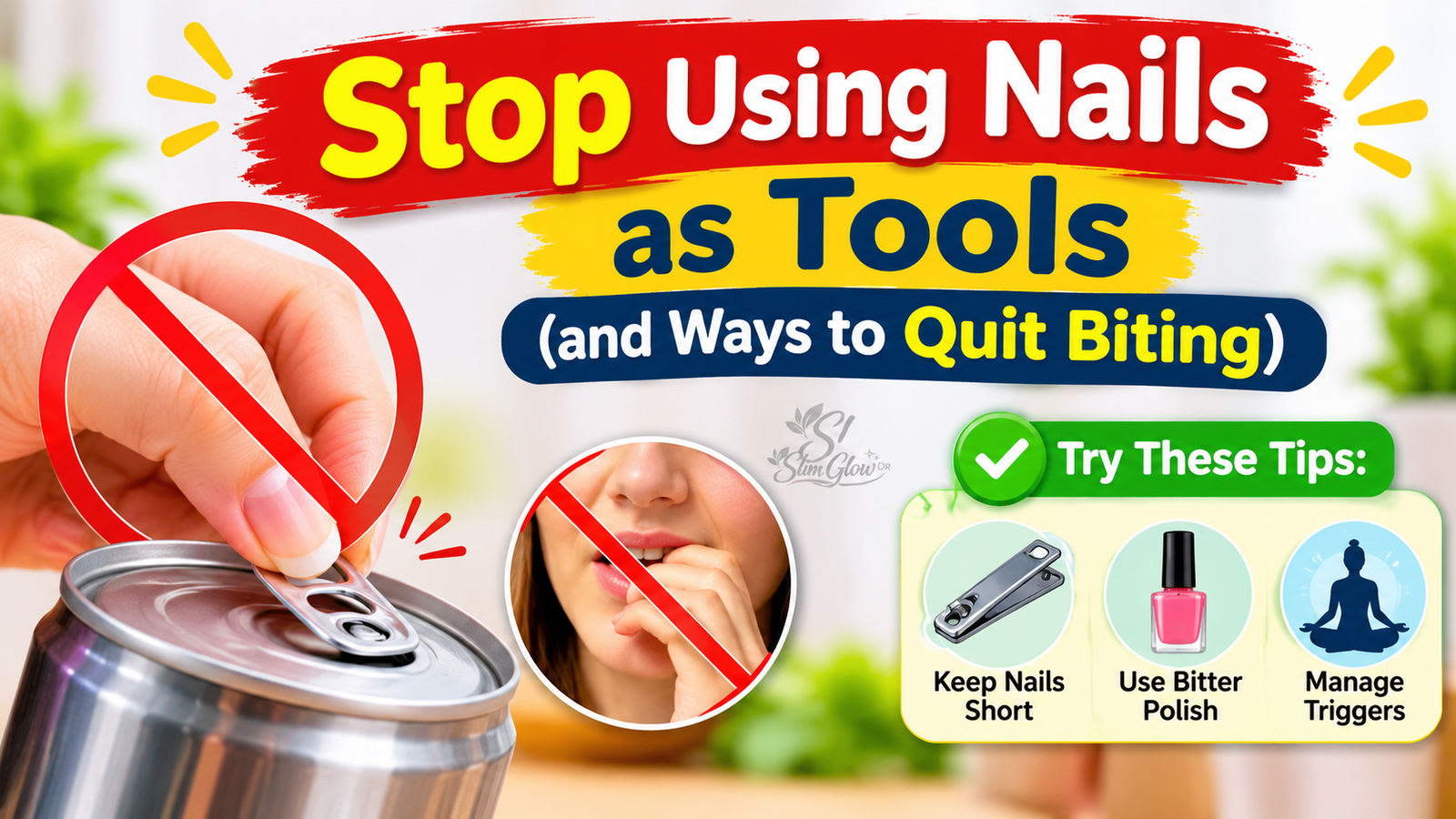
Evidence: Strong. Prying open cans, scraping off labels, and peeling stickers all bend the nail plate past its limit. Keep a small tool, like a coin or key, handy for those jobs instead.
Nail biting (onychophagia) and cuticle picking do more than make nails look ragged. Mayo Clinic notes they can damage the nail bed and let bacteria or fungi in. The AAD's advice on how to stop biting your nails includes:
- Keeping nails trimmed short so there's less to bite
- Applying a bitter-tasting nail polish
- Noticing your triggers, such as boredom, stress, or screen time
- Quitting gradually, starting with one hand or a few nails
If repeated attempts don't work, a doctor can help, and the habit is common enough that there's no reason to feel embarrassed about asking.
How to Strengthen Nails After Gel or Acrylic Manicures
Gels and acrylics often get blamed for weak nails, and the removal step is a big reason. The brittle-nails review notes that every method of removing nail cosmetics damages healthy nail plates. The AAD's gel manicure tips offer a sensible recovery plan:
- Don't peel or pry off chipping gel. Pulling it off takes layers of your nail with it. Have it removed properly instead.
- Limit acetone contact. Soak only your fingertips, or use acetone-soaked cotton wrapped in foil, rather than submerging your whole hand.
- Take a break. The AAD suggests a polish break of one to two weeks or longer between manicures.
- Moisturize often. Apply petroleum jelly or another moisturizer to nails and cuticles several times a day while they recover.
- Keep nails short while the damaged section grows out, which takes months.
The same principles apply to acrylics and dip powders: gentle, professional removal, time off between sets, and plenty of moisture. About UV nail lamps: a lab study on UV nail dryers found that their light damaged DNA in human and mouse cells grown in dishes (the full results were published in Nature Communications). That's a reason for caution, not alarm. The study didn't involve people, and the real-world skin risk is unknown. If you use gels, the AAD suggests applying a broad-spectrum, water-resistant sunscreen of SPF 30 or higher to your hands beforehand, or wearing dark, fingertip-less gloves.
Foods and Nutrients for Strong Nails
When people search for vitamins for nail growth or vitamins for strong nails, they usually hope a pill will fix things. The research points somewhere less exciting: nutrients matter most when you're actually low in them.
Nutrients Linked to Nail Health (Protein, Iron, Zinc, B12 and Folate)
A review of nutrients and nail health notes that virtually any nutritional deficiency can affect how nails grow. An earlier review of vitamins and minerals found no evidence that supplements improve nails in well-nourished people, and noted that proper nail care appears to help maintain nail health. In other words, fixing a real shortfall can help, but topping up nutrients you already get enough of is unlikely to.
- Protein. Nails are made of keratin, a protein, so getting enough protein overall makes sense. Dr. Keskinen suggests at least 45 grams a day, close to the standard US recommendation for adult women (about 46 grams), though actual needs vary with body size and activity. For breakfast ideas, see our high-protein breakfast guide.
- Iron. Iron deficiency a
- Iron. Iron deficiency anemia can cause spoon-shaped nails, which curve upward at the edges, according to the NHS list of signs of low iron. A link between low iron and brittle nails is plausible but less well studied.
- Zinc, B12, and folate. Deficiencies in these can affect nail growth in general terms, but the evidence doesn't tie specific nail changes to each one.
Big calorie cuts can make it harder to get enough protein, iron, and other nutrients, so if your nails change while you're eating much less than usual, it's reasonable to ask your doctor whether a nutrition check makes sense.
Foods That Support Stronger Nails
A food-first approach covers the nutrients above without the risk of overdoing any single supplement. These foods for strong nails are good everyday choices:
| Nutrient | Food sources | Why it matters |
|---|---|---|
| Protein | Eggs, fish, poultry, dairy, beans, lentils, tofu | Supplies the building blocks for keratin |
| Iron | Meat, beans, peas, lentils, dark leafy greens such as kale and watercress, iron-fortified cereals and bread, dried apricots and prunes | Low iron can cause spoon-shaped nails |
| Zinc | Meat, shellfish, beans, nuts, seeds, whole grains | Deficiency can affect nail growth |
| Vitamin B12 | Meat, fish, eggs, dairy, fortified cereals | Deficiency can affect nail growth |
| Folate | Leafy greens, beans, lentils, fortified grains | Deficiency can affect nail growth |
The iron food examples come from the NHS. If you eat a plant-based diet, pay particular attention to B12, since it comes mainly from animal foods and fortified products.
Does Biotin Work for Nails? An Honest Look
Biotin (vitamin B7) is the supplement most often sold for nails, so it deserves a careful look. The short version: biotin for nails has some early, encouraging signals, but the evidence is old, small, and uncontrolled, and it hasn't been shown to help people who aren't deficient.
What the Biotin Studies Actually Found
The NIH biotin fact sheet sums up the research on brittle nails as three small studies, none of which included a placebo group:
- 1989: In the original study, 71 people with brittle fingernails took 2.5 mg of biotin daily. Of the 45 who could be evaluated, 41 had firmer, harder nails. Treatment lasted about 5.5 months on average.
- 1990: Using electron microscopy, the same research group found nail thickness rose by 25% in a group of just 8 treated patients, with less splitting.
- 1993: A review of one nail practice's records found 44 patients had been prescribed biotin. Of the 35 who were evaluated, 22 reported improvement, based on their own assessment.
Reviews of the biotin research reach cautious conclusions. One 2018 review called the results promising but said larger controlled trials are needed to establish whether biotin works and at what dose. A 2017 review of biotin case reports found that everyone who improved had an underlying condition, and concluded there isn't enough evidence to support biotin for people without a deficiency. Biotin deficiency itself is uncommon.
The original study used 2.5 mg (2,500 mcg) a day, roughly 80 times the 30 mcg Adequate Intake set for adults. Many supplements now contain 5,000 mcg or more. No trial has shown that higher doses work better for nails, and higher doses are the ones most likely to affect lab tests. This article doesn't recommend a dose. If you're considering biotin, talk to your doctor first, especially if you're pregnant, take other medications, or have blood work coming up.
The Biotin Lab-Test Warning You Should Know
The FDA has warned (in 2017, updated in 2019) that biotin can interfere with lab tests, causing results that are falsely high or falsely low. That includes troponin tests used to help diagnose heart attacks, and the agency says it has continued to receive reports of falsely low troponin results linked to biotin. The NIH notes that high doses can also skew tests for hormones such as thyroid hormone.
Biotin isn't only in single-ingredient pills. It also turns up in hair, skin, and nail blends, B-complex vitamins, multivitamins, and prenatal vitamins. Before any blood test, tell your doctor and the lab about every supplement you take. They'll advise whether, and for how long, to pause it, since there's no established standard waiting period.
Pharmacist's note: Bring the actual bottles, or photos of the labels, to any appointment or lab visit. Biotin can appear on a label as biotin, vitamin B7, or vitamin H, and it is easy to miss inside gummies and blends. Don't stop or start any supplement or medicine for a test on your own; ask the clinician who ordered the test what to do.
Thinking about hair as well? See our evidence-ranked guide to the best hair growth supplements for women over 40
Collagen, Horsetail and Other Nail Supplements: What the Evidence Says
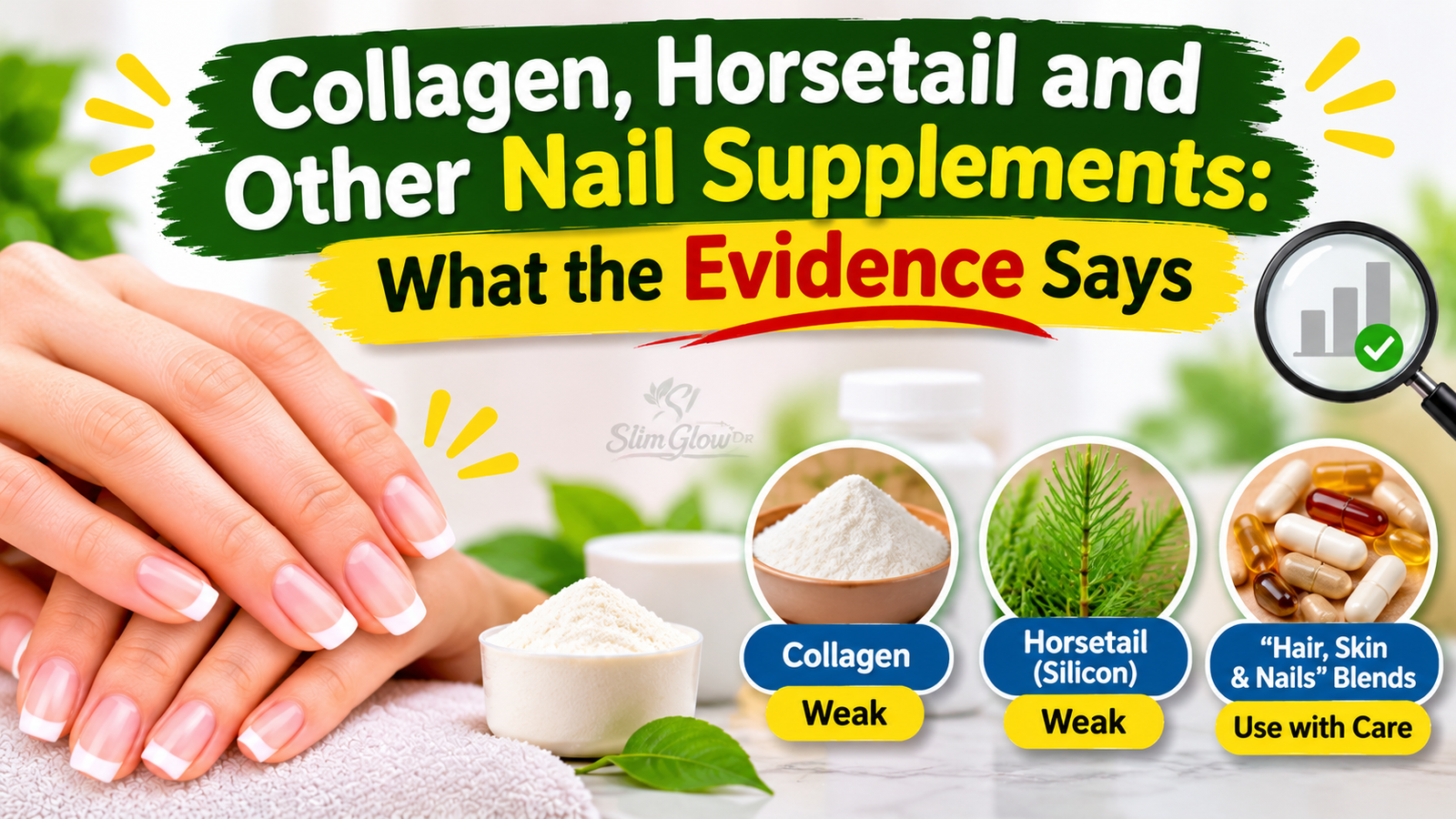
Collagen for nails: Weak. The main evidence is a small collagen trial published in 2017. Twenty-five women aged 18 to 50 with brittle nails took 2.5 g of collagen peptides daily for 24 weeks, and 24 finished. Nail growth rose by 12%, broken nails fell by 42%, and 64% showed overall improvement, mostly rated as fair.
Those numbers sound good, but the study had no control or placebo group, so some of the improvement could reflect better nail care during the study or simply expectations. It tested one manufacturer's product, two of the six authors were from a collagen research institute, and the paper doesn't disclose who funded it. The authors themselves called for larger placebo-controlled studies.
Horsetail and silicon: Weak. Horsetail is promoted for nails mainly because it contains silicon. One placebo-controlled trial gave a form of silicon to 50 women with sun-damaged skin for 20 weeks. Their self-rated nail brittleness improved compared with where they started, but the published abstract reports the nail result only as a change from baseline, not as a comparison with placebo, and the participants weren't chosen for brittle nails. No controlled trial has tested oral horsetail itself for nail strength.
"Hair, skin and nails" blends: These usually combine several of the ingredients above, often with high-dose biotin. That means the biotin lab-test warning applies to them too, even if biotin isn't the headline ingredient.
Popular Nail Remedies That Don't Hold Up
If you've tried any of these natural remedies for brittle nails, you're far from alone. Here's why they're unlikely to help.
- Gelatin. Eating gelatin is an old nail tip, but there's no good modern evidence that it strengthens nails, and Dr. Keskinen reports not seeing it help. Even collagen peptides (see above) have only one small, uncontrolled study.
- Drinking extra water. Staying hydrated is good for your general health, but there's no evidence that drinking more water makes nails stronger. Water on the outside of your nails is the bigger issue.
- Calcium. Nails are made mostly of keratin, a protein, not calcium. There's no good evidence that calcium supplements strengthen nails in people who aren't deficient.
- Lemon juice soaks. Citrus juice on the skin followed by sun exposure can react with sunlight and cause redness, blistering, and dark marks that last for months.
- Garlic rubs. Garlic is a well-known cause of allergic skin reactions on the fingertips, and raw garlic can irritate the skin badly enough to cause burn-like injuries in some reported cases.
- Apple cider vinegar soaks. There's no evidence they help, and any frequent soaking adds to the wet-dry cycling that weakens nails in the first place.
When Weak Nails Could Signal Something Else
Most brittle nails are a cosmetic and lifestyle problem. Occasionally, though, nail changes point to an infection or another health condition.
Signs It Might Be a Fungal Infection
According to the NHS, signs of a fungal nail infection include a nail that becomes discolored (often white or yellow), thicker than usual, brittle, or crumbly. It usually affects toenails and often starts at the edge before spreading. In some cases the nail lifts away from the skin, and the surrounding skin can become swollen and painful.
Moisturizers and nail supplements aren't treatments for a fungal infection, so it's worth getting a proper diagnosis. In the UK, the NHS suggests starting with a pharmacist; in the US, a primary care doctor or dermatologist is a good first stop. See a doctor sooner if the infection is spreading, treatment hasn't worked, or you have diabetes or a weakened immune system.
Health Conditions Linked to Nail Changes
Medical sources including the NHS, Cleveland Clinic, and a dermatology review of brittle nails note that some nail changes can signal other conditions, including:
- Thyroid disease. Both underactive and overactive thyroid can be associated with nail changes, including brittleness and softness.
- Iron deficiency anemia, which can cause spoon-shaped nails.
- Psoriasis, which can affect nails as well as skin.
- Raynaud's phenomenon, which reduces blood flow to the fingers.
- Diabetes, and heart, lung, or liver disease.
- Some medicines, including chemotherapy.
None of these is likely if brittle nails are your only symptom and you have obvious everyday triggers. They're more worth considering when nail changes come with other symptoms or don't improve with good care.
Pharmacist's note: If your nails changed after you started a new prescription, don't stop the medicine on your own. Write down the medicine, the dose, and when you first noticed the change, then ask the prescriber or a pharmacist whether it could be involved.
When to See a Doctor or Dermatologist (and What to Ask)
Consider booking an appointment if:
- Your nails haven't improved after about three months of consistent good habits
- A nail has changed shape or color, or fallen off, and you don't know why
- You notice grooves, or the nail separating from the skin underneath
- A nail or the skin around it is painful, swollen, red, or warm
- You have other new symptoms alongside the nail changes that you can't explain
Questions you might raise with your doctor include: Could this be a fungal infection? Would it make sense to check my iron or ferritin, thyroid function, or vitamin B12? Could any of my medicines be playing a role? Is a prescription nail lacquer worth trying? Your clinician can decide which tests, if any, make sense for you.
Key Takeaways
- Most weak nails improve with less soaking, daily moisturizing, and gentle nail care.
- Work out whether your nails are dry-brittle or soft-brittle, since they need slightly different fixes.
- Expect a few months before you see results, because nails grow slowly.
- Biotin and collagen have limited evidence unless you're deficient, and biotin can skew lab tests.
- Gelatin, extra water, and lemon or garlic soaks are unlikely to help.
- Persistent changes, discoloration, or other symptoms are worth a doctor's visit.
The Bottom Line
Learning how to strengthen nails naturally comes down to this: protect the nail you have, feed the one growing in with enough protein (see the food table above), save supplements for when a clinician finds a real reason for them, and judge the results in months, not weeks.
Pick two or three habits from this guide, use them every day, and take a photo of your nails now so you can compare in about three months. If your nails don't improve, or you notice any of the warning signs above, book a visit with your doctor or a dermatologist.
Frequently Asked Questions
Does Vaseline (petroleum jelly) strengthen nails?
Not directly. Petroleum jelly doesn't harden nails, but as a thin layer over cream or oil at bedtime it slows moisture loss, which helps dry, peeling nails. For soft, bendy nails, cutting down on water exposure matters more.
What is the best oil for strengthening nails?
No study has shown that any one oil strengthens nails better than the others. Jojoba, olive, almond, coconut, and lanolin-based products can all moisturize nails and cuticles, so pick one you'll use daily, ideally after washing your hands.
What deficiency causes weak or brittle nails?
Low protein, iron, zinc, and B vitamins can all affect nail growth, but the link to brittle nails specifically isn't well established for most of them. Iron deficiency is best known for causing spoon-shaped nails, and true biotin deficiency is uncommon. Ask your doctor about testing rather than supplementing on your own.
Can drinking more water make my nails stronger?
There's no evidence that drinking extra water strengthens nails, though staying hydrated is good for your overall health. Repeated wetting and drying from outside water matters more, which is why gloves and moisturizer usually help more than another glass of water.
Are nail hardeners bad for your nails?
Not always, but they come with tradeoffs. Some hardeners may firm nails in the short term, and Mayo Clinic says one might help, but products containing formaldehyde can cause allergic reactions and, in some cases, painful separation of the nail from the nail bed. Check the ingredients, stop if you notice irritation or lifting, and ask a dermatologist about gentler options.
How long does biotin take to work on nails, if it works at all?
In the main 1989 study, people took biotin for about five and a half months on average, so any benefit would take months, not weeks. If you aren't deficient, it may not help at all, and the studies were small with no placebo groups.
Are brittle nails a sign of thyroid problems or anemia?
They can be, but most of the time they aren't. Thyroid disease can be associated with brittle or soft nails, and iron deficiency anemia can cause spoon-shaped nails. These causes are more likely when nail changes come with other symptoms, such as unusual tiredness, or don't improve with good nail care. Your doctor can check your thyroid function and iron levels.